
Spiral Horns And A Talent For Vanishing In Thick Bush.
Four things that shape every kudu hunt, from the country to the horns.
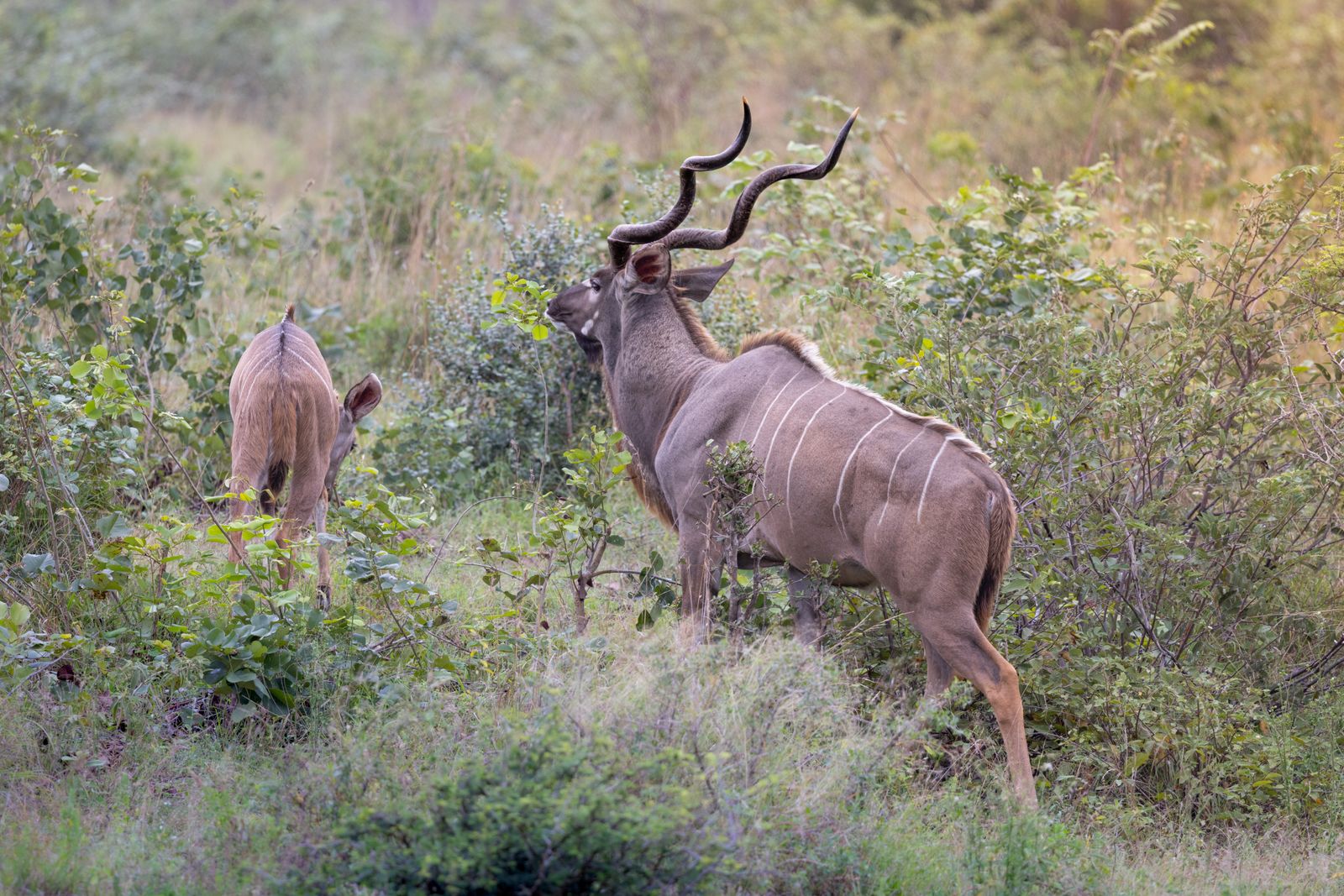
Kudu favour the thickets and valleys of the Eastern Cape, with more in the Limpopo bushveld and the Karoo — country with enough cover to hide a very large antelope.
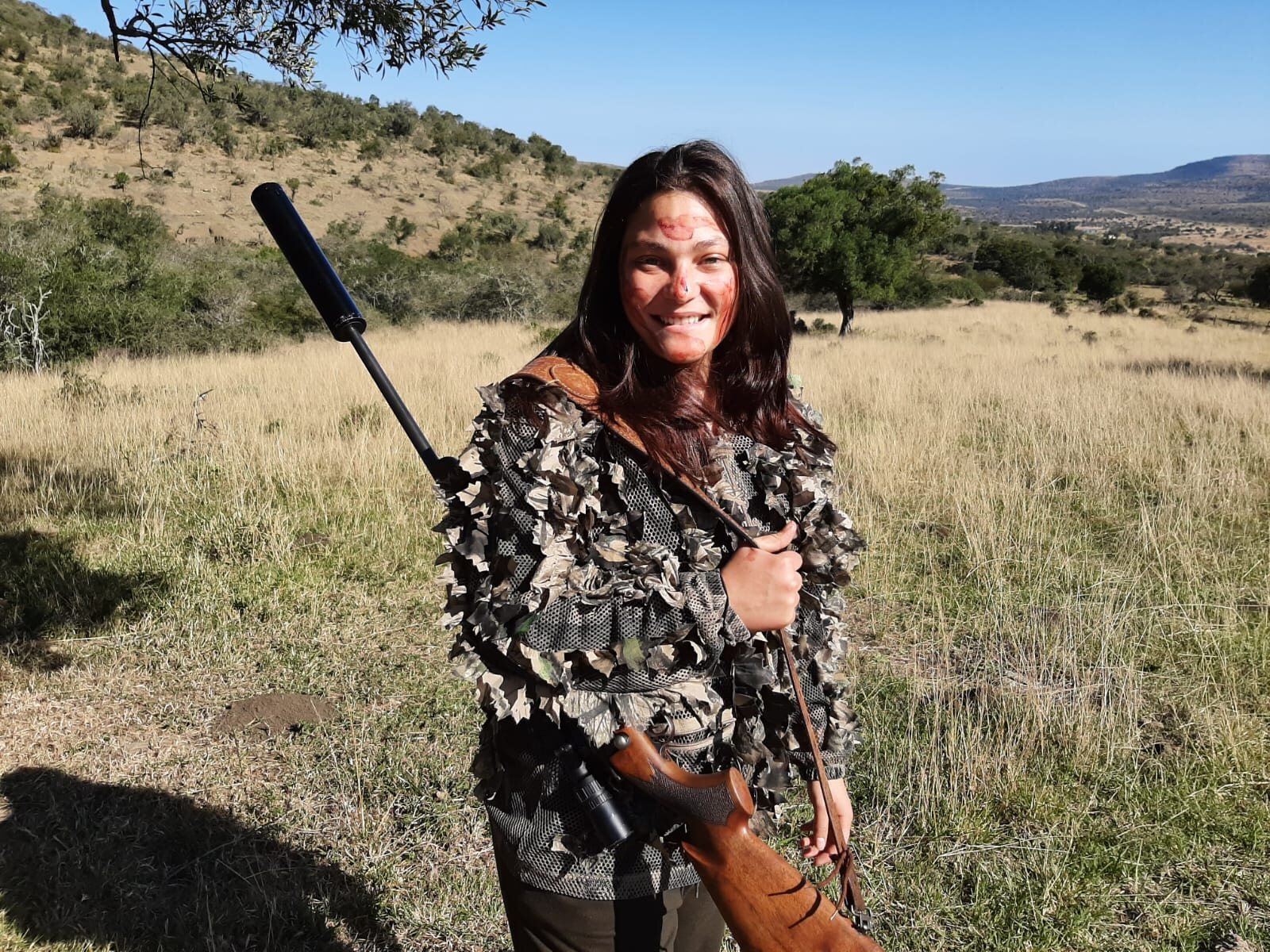
A kudu hunt is mostly walking: following fresh spoor with trackers, reading the bush and keeping the wind in your face until a bull finally shows.
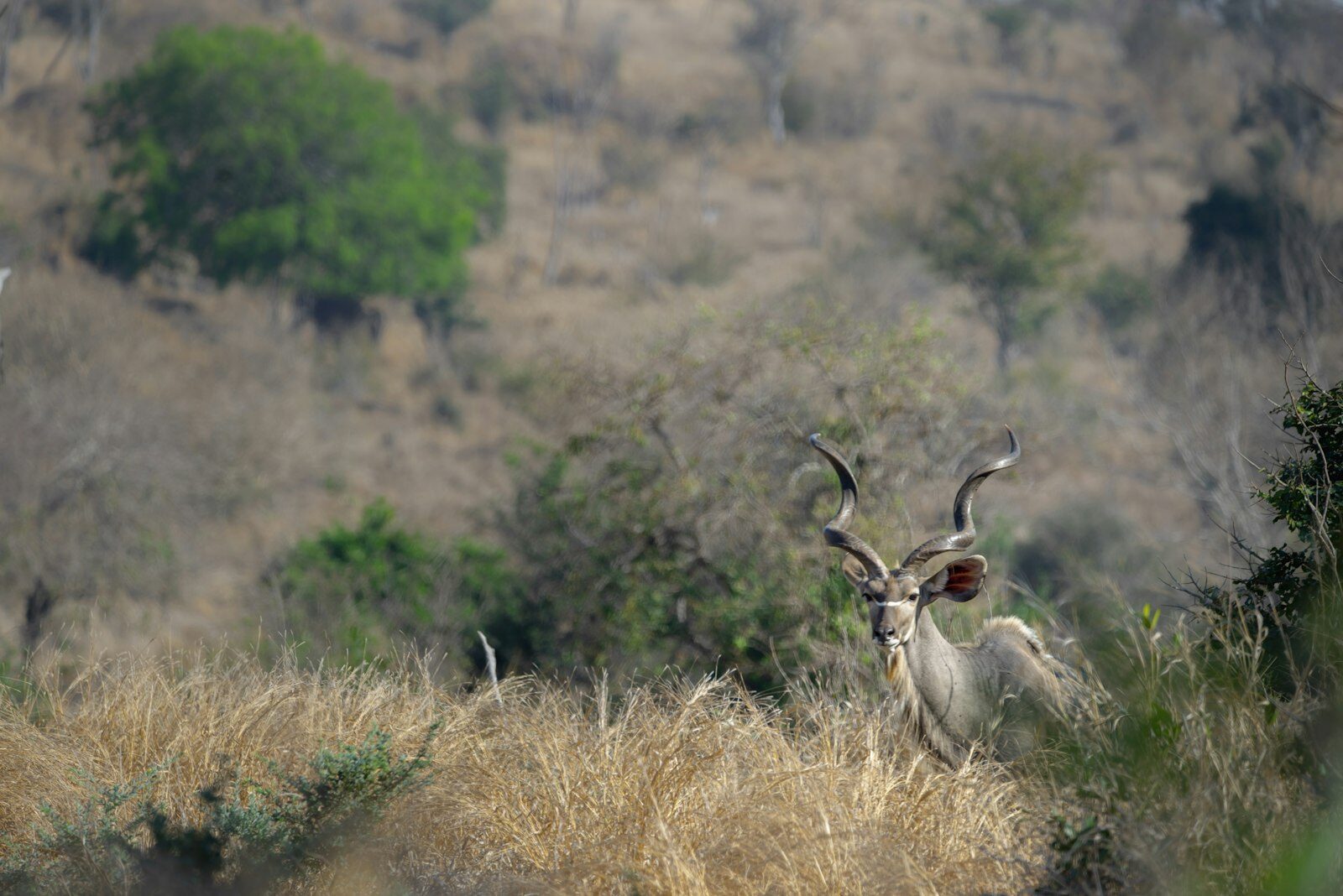
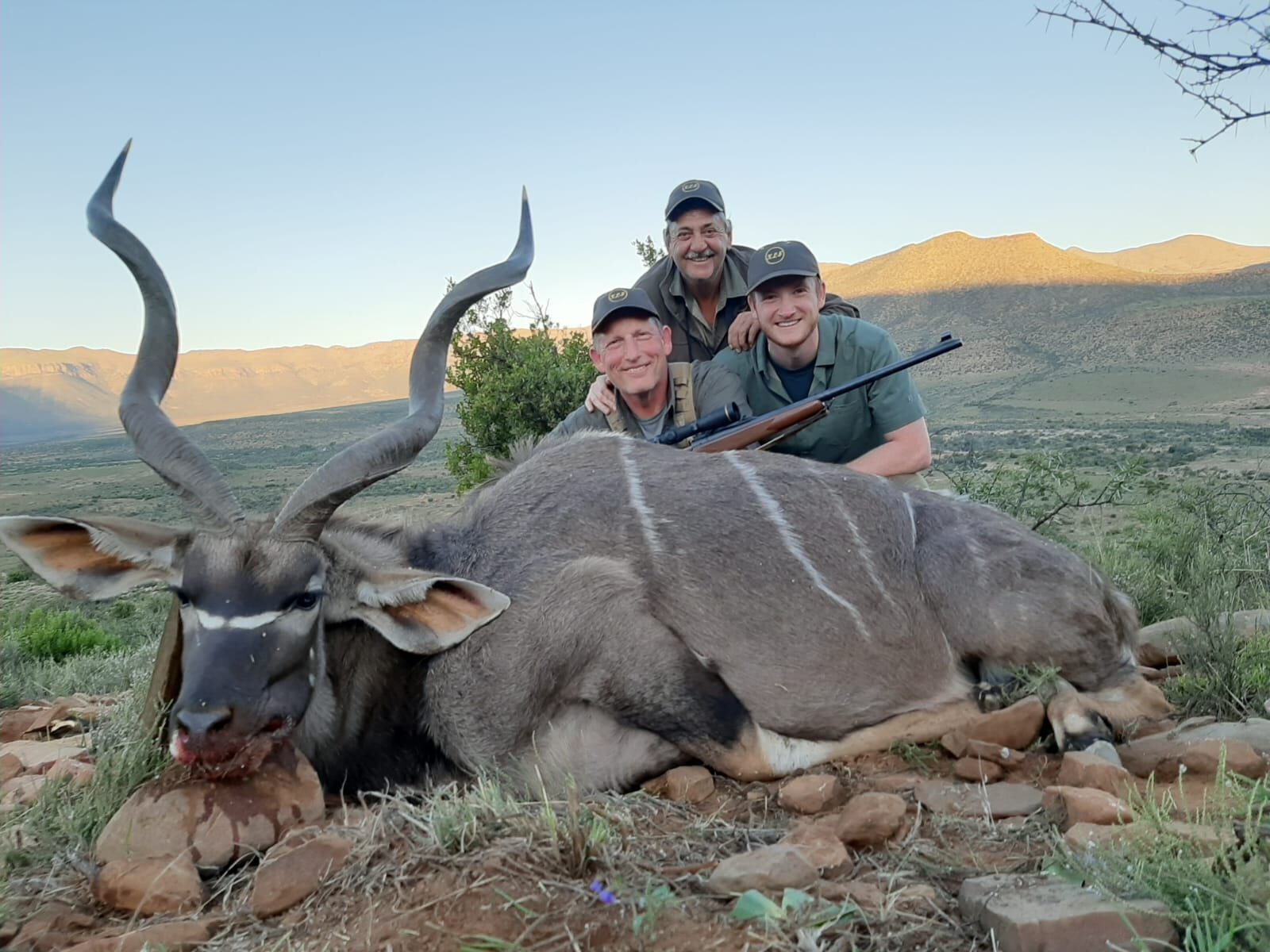
Only bulls carry horns. On a mature bull they spiral up to 180cm along the curve, with as many as three full turns — the reason kudu sit near the top of most plains game lists.
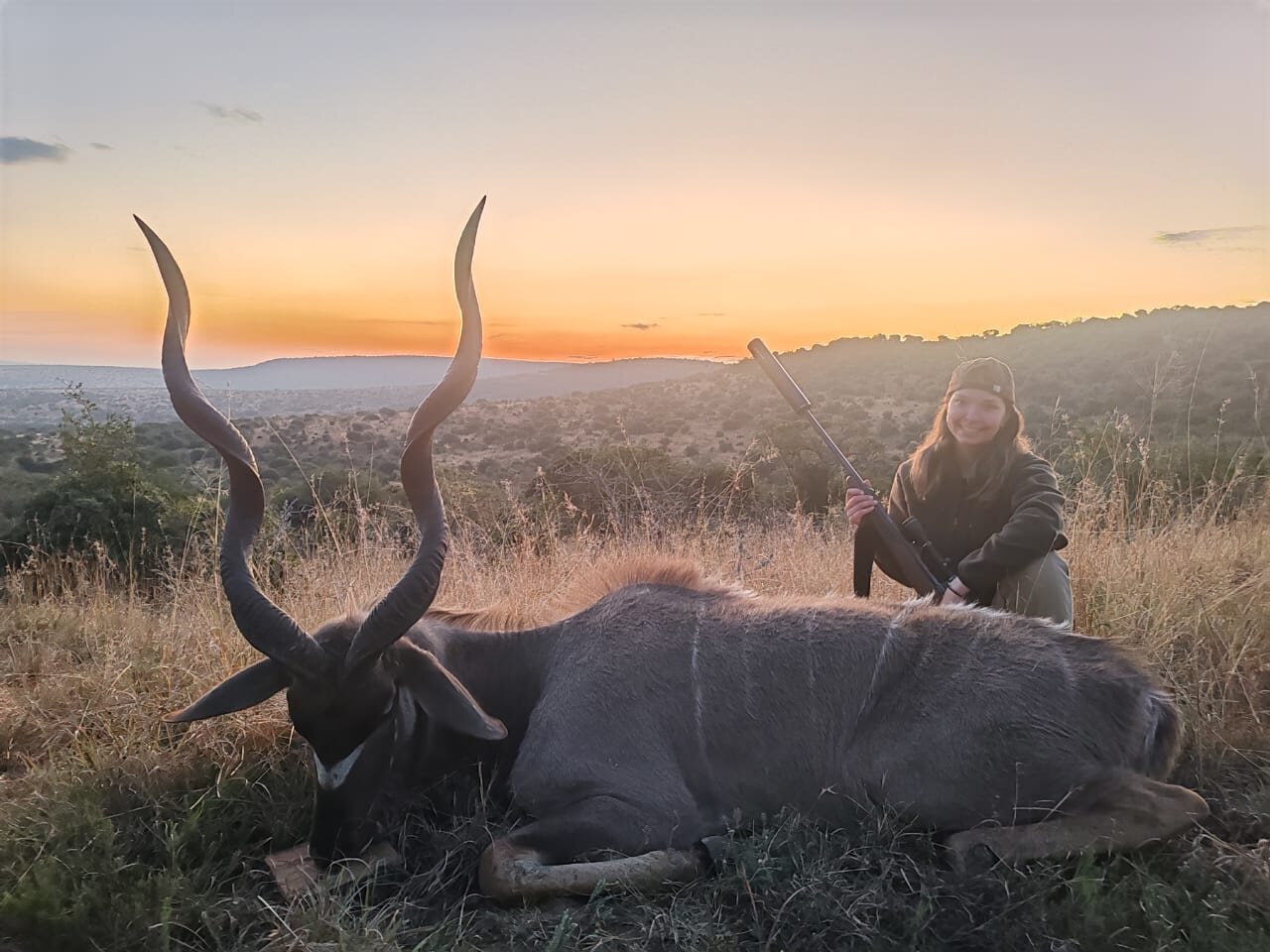
A bluish-grey coat with six to ten narrow white stripes, and the habit of freezing when disturbed, lets a kudu vanish a few metres away.
Fly into Johannesburg or Cape Town and connect on to Gqeberha, East London, George or Polokwane. Seasons, what to pack and how the hunting season runs from mid-February to mid-July.
SA Airlink flies Johannesburg to Nosy Be direct, early on Tuesday mornings. Never book via Antananarivo on the mainland.
Nosy Be Flight RoutesThe greater kudu is Africa’s second-tallest antelope, and one of the most sought-after trophies in South African hunting.
Bulls carry long, spiralling horns — up to 180cm along the curve, with as many as three full turns — found only on the males. A bluish-to-grey coat marked with six to ten narrow white stripes helps them disappear into dense bush, and a fringe of long hair under the chin and along the spine adds to their striking profile.
Kudu are browsers, feeding on leaves, shrubs, vines and fruit, and can go without a regular water source when the terrain demands it. Bulls are largely solitary outside the mating season, while cows move in small family groups of three to ten — both are masters of standing motionless, using dense cover to vanish in plain sight.
Three pages on Africa’s second-tallest antelope — the bull, the thick country that hides it, and how it is hunted in the Eastern Cape.
 1
Bulls carry spiralling horns up to 180cm along the curve, over a bluish-grey coat marked with six to ten narrow white stripes.
They browse leaves, shrubs and fruit, and can go without a regular water source when the terrain demands it.
2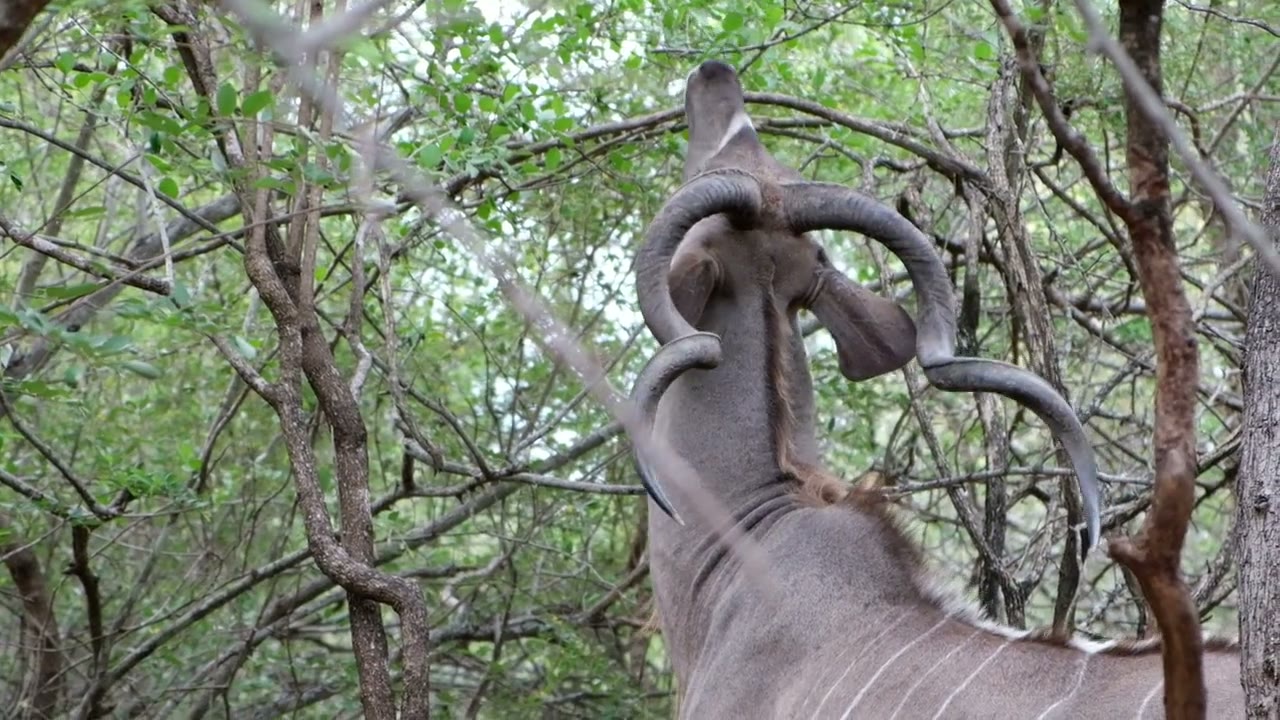 3
Kudu hold thick bush, riverine scrub and broken hill country — cover dense enough that a bull carrying metre-and-a-half horns can stand thirty paces away and simply not be seen.
They browse rather than graze, taking leaves, pods and fruit, which frees them from open grassland and keeps them in the thickets. It is the reason so many hunters walk straight past their first kudu.
4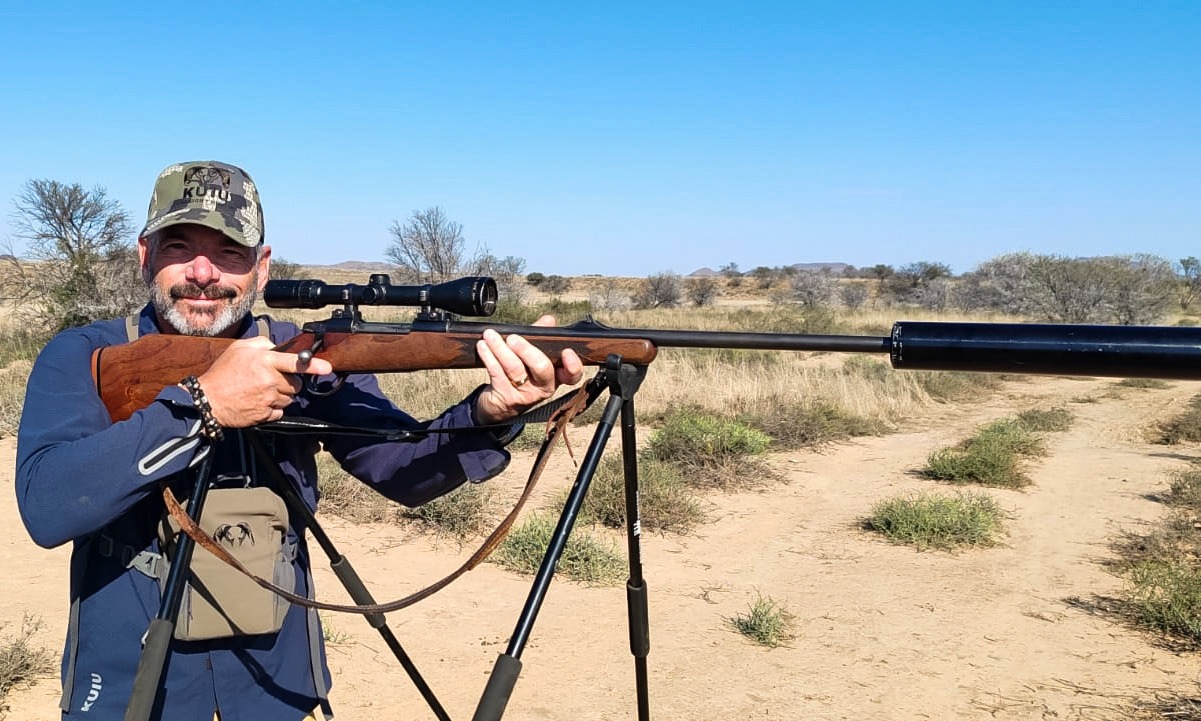 5
Their gift for stillness makes kudu one of the more demanding plains game hunts we offer — patient tracking and bushcraft rather than distance.
We hunt them on foot through Eastern Cape thickets, reading fresh sign and working the wind.
6
Their gift for stillness and cover makes kudu one of the more demanding plains game hunts on offer — more a test of patient tracking and bushcraft than a long-range shot. We hunt them on foot through the thickets and rolling valleys of the Eastern Cape, reading fresh sign and working the wind to close the distance without being seen.
The kudu, the track, the ground it is hunted on.
Kudu are hunted on foot in thick country — the thickets and rolling valleys of the Eastern Cape, the Limpopo bushveld and the Karoo — with Anthony Schenk beside you the whole way.
A striped coat and a habit of standing dead still let a kudu vanish into cover a few metres away. That makes this a tracking and bushcraft hunt far more than a long-range shot: reading fresh spoor with the trackers, working the wind, and waiting for the bull to show himself.
The prize is the horns. A mature bull can carry spirals up to 180cm along the curve, with as many as three full turns, and we will tell you honestly what is realistic to find in the days you have.
Rifle hire is available as part of your safari if you would rather not fly with a firearm, and the accommodation, meals and trophy export are arranged around the hunt.
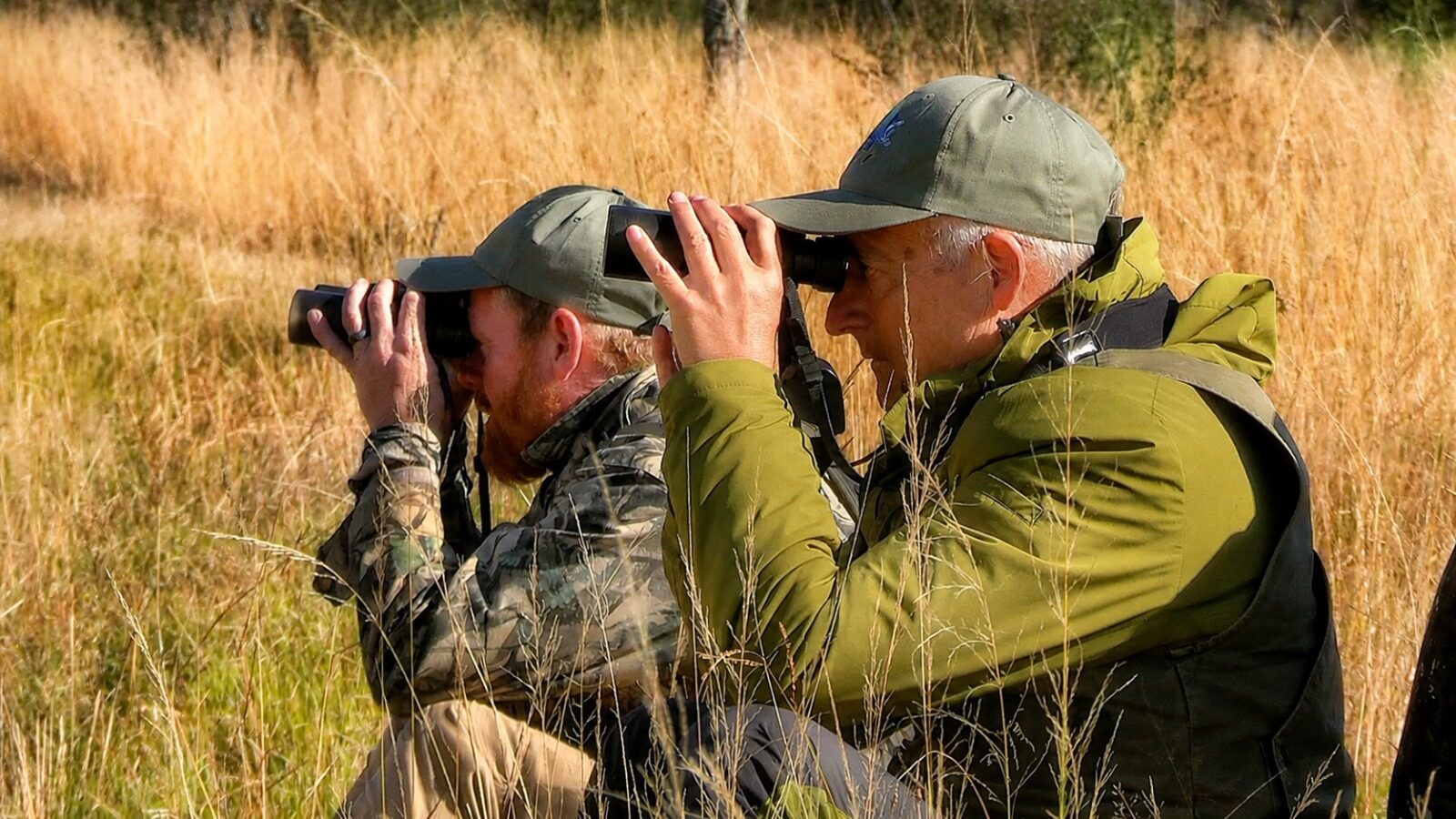
Glassing the slopes for a kudu bull.
Mainly the thickets and rolling valleys of the Eastern Cape, along with Limpopo bushveld and the Karoo.
Their striped coat and habit of standing motionless let them disappear into dense bush — it is a tracking and bushcraft challenge more than a long-range shot.
A mature bull's spiralled horns can reach up to 180cm along the curve, with as many as three full turns.
Yes — rifle hire is available for guests who need it, as part of your personalised safari package.
The South African hunting season runs from mid-February to mid-July, and the winter months open up the bush for tracking.
Yes. Trophy export is arranged as part of the trip, so the paperwork is handled for you after you fly home.
Tell us roughly when you can travel and who is coming, and we will tell you honestly whether a Kudu hunt fits the days you have.
Rough dates and who is coming is enough to start. No lengthy booking form, no card details.
If the days you have will not cover it, we say so up front and adjust rather than take the booking and disappoint you.
Nothing sold off a shelf. Priced against your dates, group and interests — in USD, Euro or ZAR.
Land-based four to sixteen, live-aboard six to eight, big-game fishing four to five. Never a crowd.
Ask On WhatsApp Request A Quote
We respect your privacy under South Africa’s POPIA. This site does not use advertising cookies. With your permission we use Google Analytics to see which pages are useful; otherwise it uses only what it needs to work and stay secure, plus a few trusted services (Google Fonts, Cloudflare security, and on our Contact page the tools that check phone numbers and dates). Choose what you are happy with — you can change it any time under “Privacy settings” at the foot of every page. Read our Privacy Notice.
Keeps the site working and secure (Cloudflare) and remembers this privacy choice. These cannot be switched off.
Google Analytics shows us which pages are useful and how visitors find us. It sets cookies (_ga) and only runs if you allow this.
Would allow advertising or social-media tracking. We do not use any at present; if we ever do, they only run if you allow this.