
A Low-Light Hunt In Dense Woodland Near Water.
A quiet, low-light hunt where recognising the right animal matters as much as the stalk.
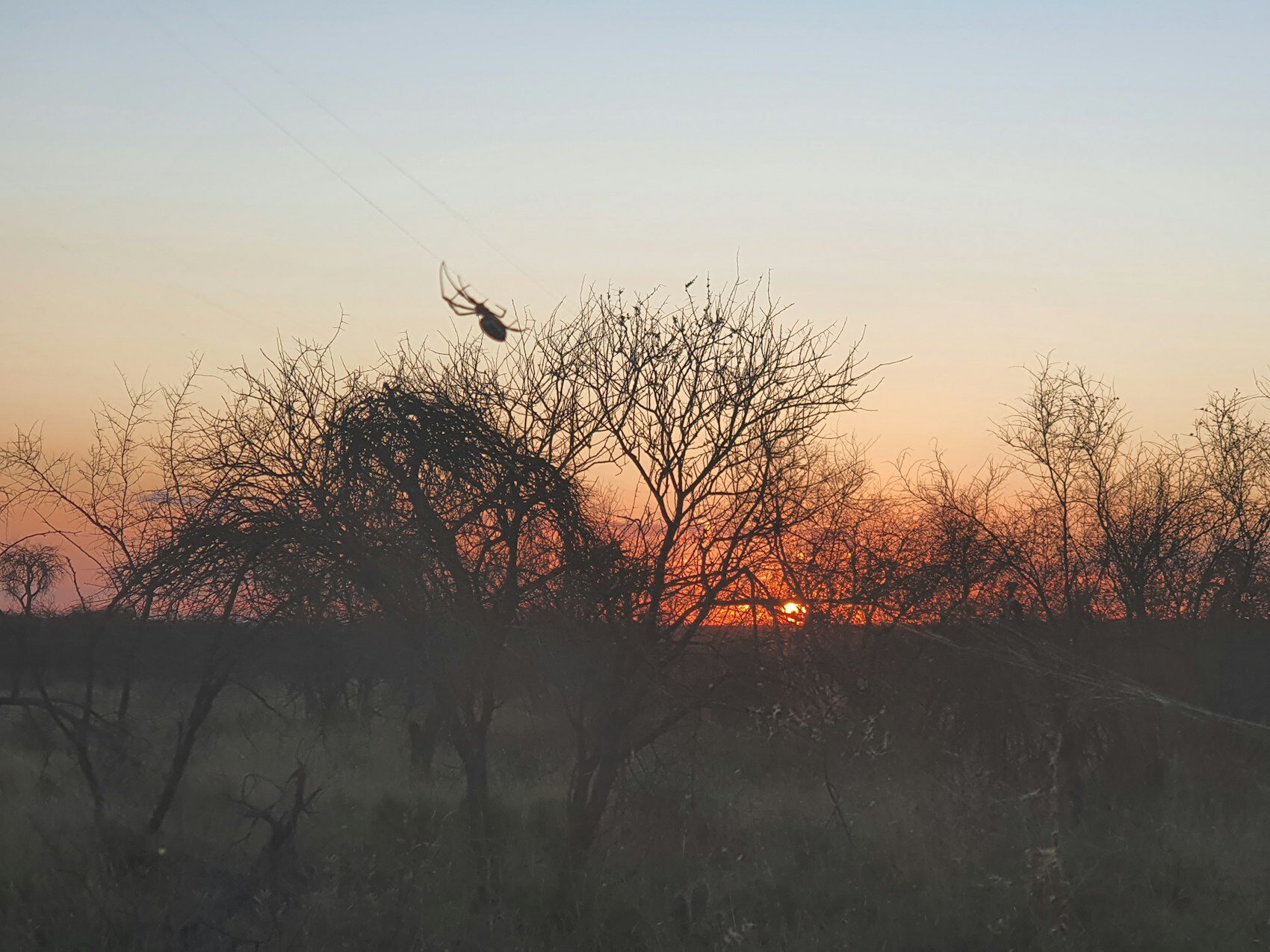
Nyala are most active in low light and through the night, so days are built around first and last light rather than the heat of midday.
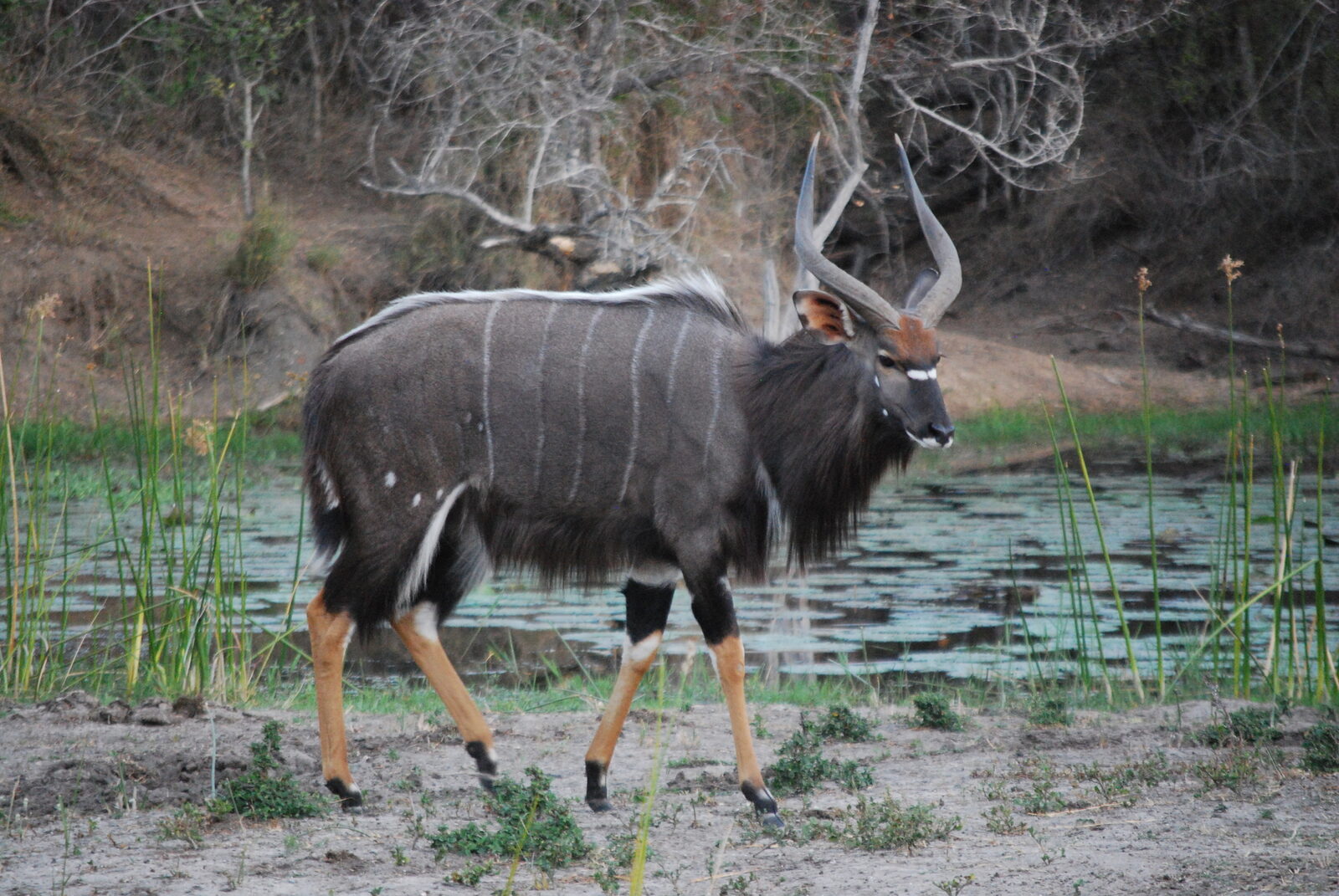
Look for nyala in dense woodland close to water in the Eastern Cape and the Limpopo bushveld.
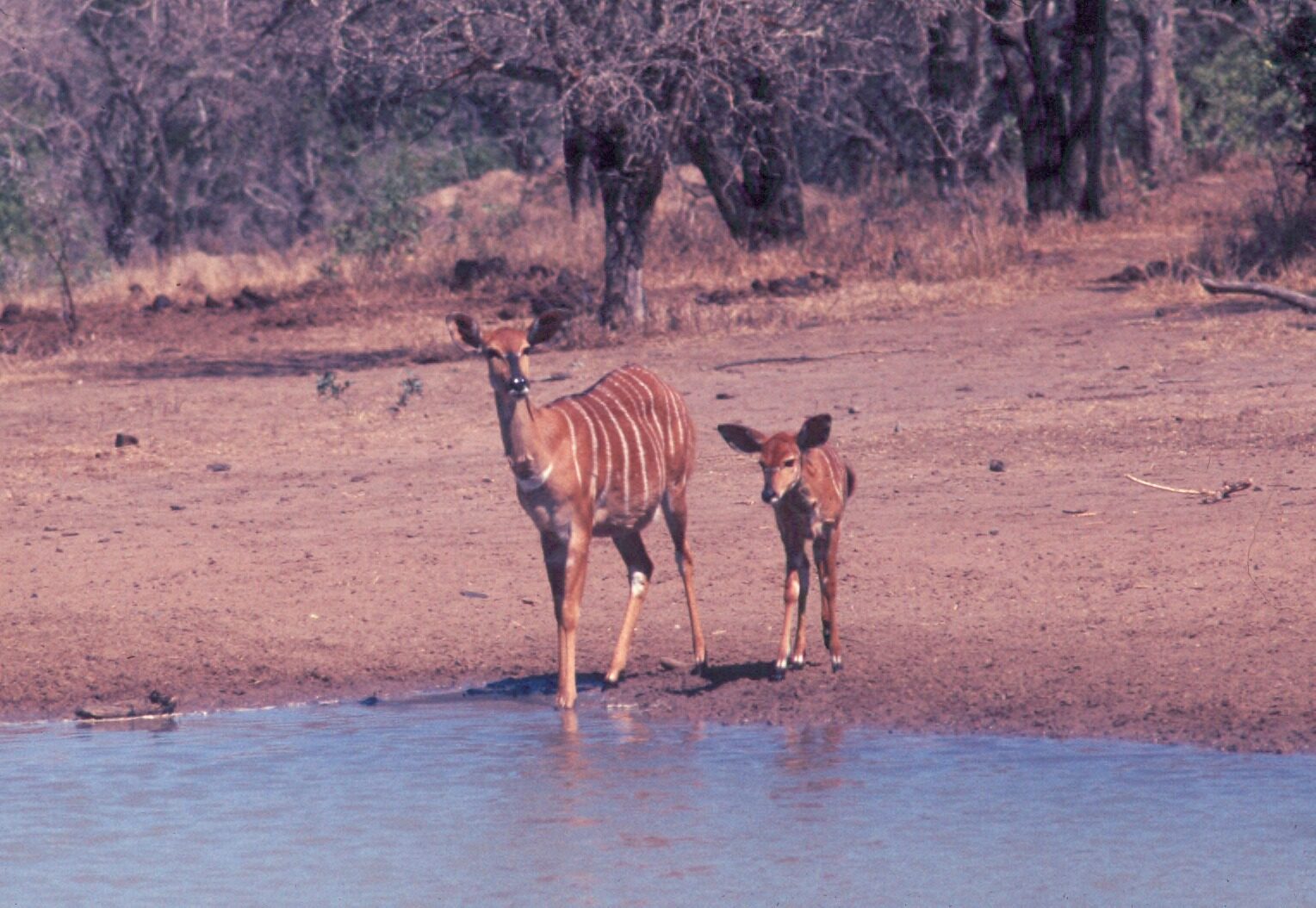
Cows and calves stay rusty red with white stripes and carry no horns. Mature bulls turn slate grey and shaggy — your guide makes sure the right animal is in the scope.
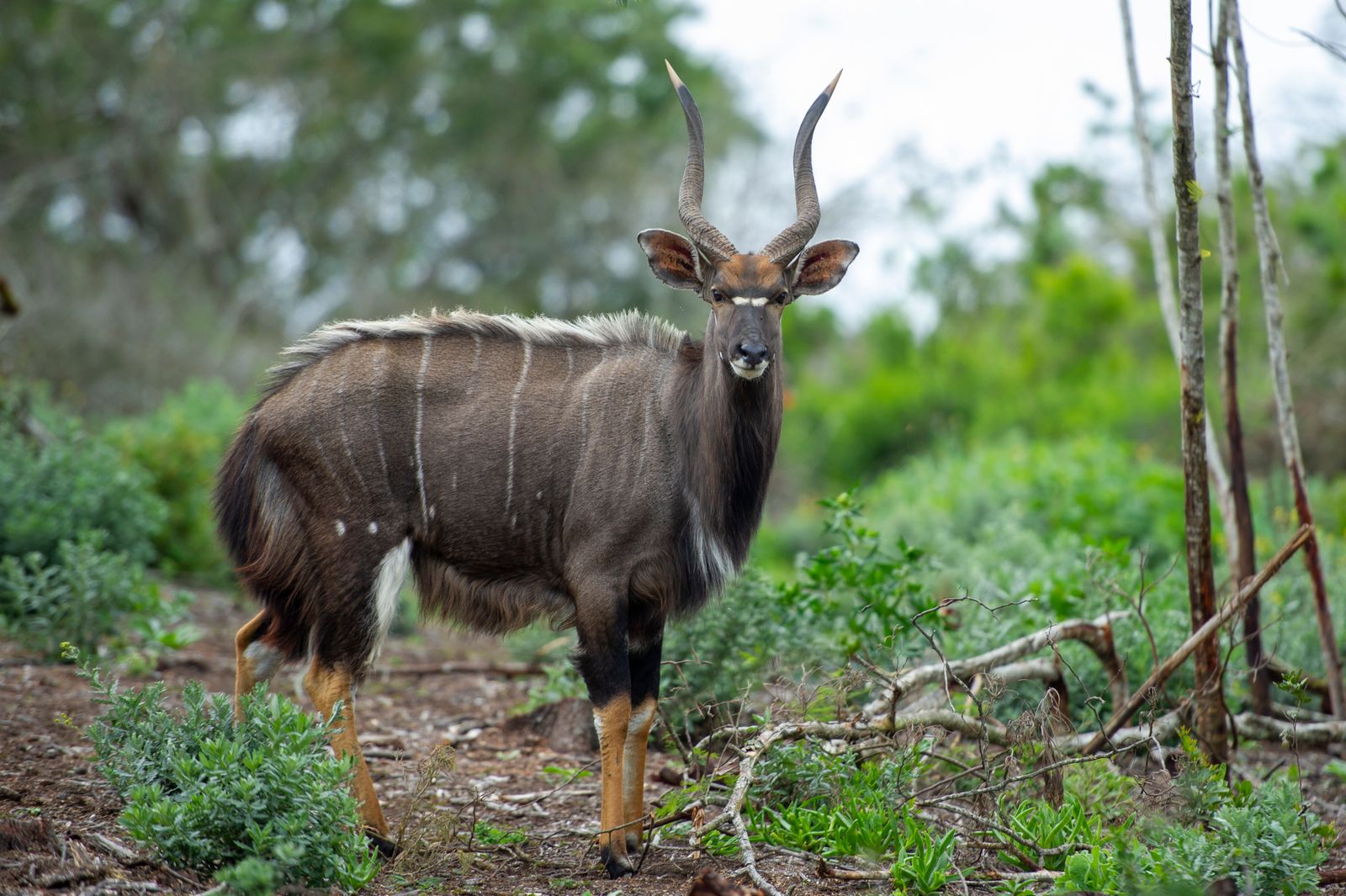
Bulls stand just over a metre, weigh about 98 to 125kg and carry yellow-tipped horns up to 80cm long, with one or two twists.
Fly into Johannesburg or Cape Town and connect on to Gqeberha, East London, George or Polokwane. Seasons, what to pack and how the hunting season runs from mid-February to mid-July.
SA Airlink flies Johannesburg to Nosy Be direct, early on Tuesday mornings. Never book via Antananarivo on the mainland.
Nosy Be Flight RoutesThe nyala is one of South Africa’s most elegant antelope, with males and females so different in colour and shape they are easy to mistake for two species.
Bulls stand just over a metre at the shoulder and weigh 98 to 125kg, carrying yellow-tipped horns up to 80cm long that spiral upward with one or two twists — females are hornless. Where cows and calves stay rusty red, mature bulls darken to a striking slate grey, with a long dorsal crest and a fringe of hair along the chest and belly, marked with fine white vertical stripes.
Nyala favour dense woodland close to water and are most active at dawn, dusk and through the night. They browse and graze in small, loose herds without defending fixed territory, which makes patience and good cover more important than a long approach.
Three pages on one of South Africa’s most elegant antelope — the bull, the thick country it lives in, and the herd.
 1
Bulls weigh 98 to 125kg with yellow-tipped horns up to 80cm, spiralling upward with one or two twists; females are hornless and rusty red.
Adult males turn slate grey and carry a dorsal crest and a long fringe along the chest and belly. They live in dense woodland near water and are most active in the evening and at night, which is what makes this a patient dawn-and-dusk hunt.
2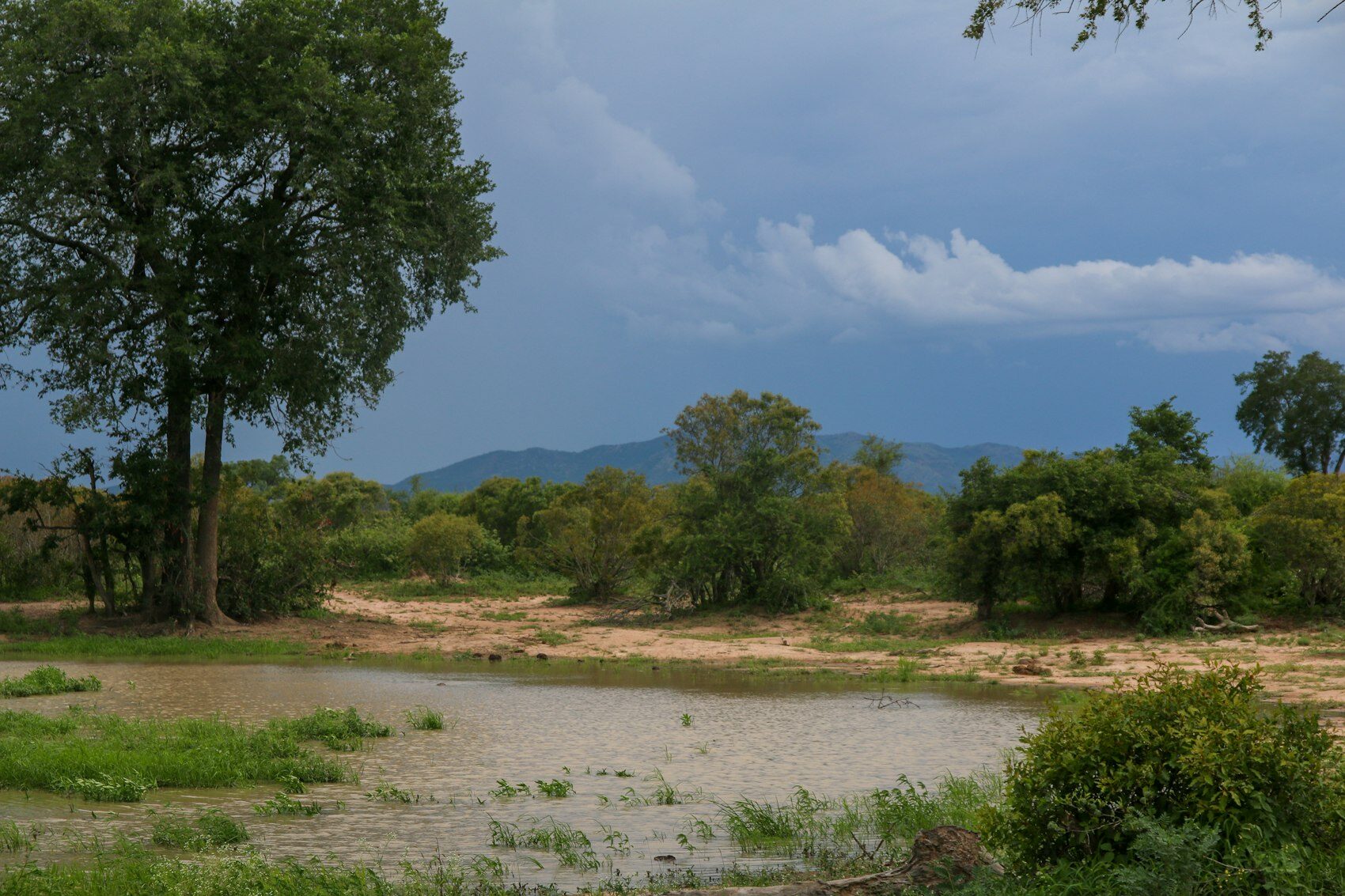 3
Nyala are animals of dense riverine thicket and dry savanna woodland, and they stay close to water. They both browse and graze, which lets them work the edge where heavy cover meets open ground.
In South Africa they are strongest through KwaZulu-Natal and across the Limpopo and Mpumalanga lowveld — country where you glass the shadows rather than the open.
4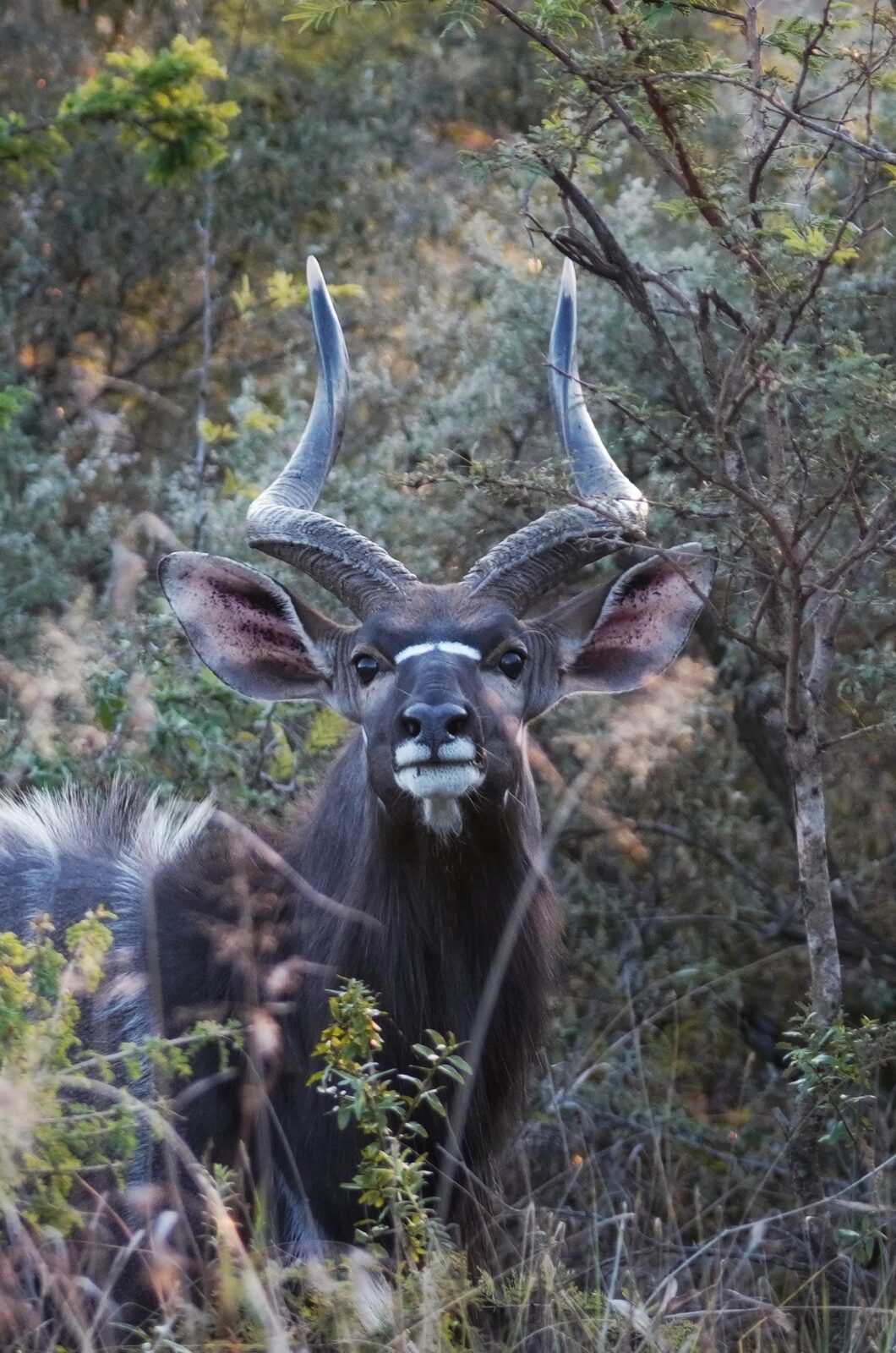 5
Bulls and females look so unalike that they are regularly mistaken for separate species — the female rusty red and hornless, the mature bull slate grey, shaggy and heavy-horned. Few antelope differ this sharply between the sexes.
They form no permanent herds. Small, loose groups gather and break up around feeding and water, often with a cow and her calf at the centre, and bulls settle rank by standing side-on with the crest raised rather than by fighting.
6
Because nyala are most active as light fades, this hunt often means quiet evenings glassing thick cover near water — a patient, rewarding style of hunting for guests who enjoy the wait as much as the shot. Good cover and a still approach matter more here than distance.
Nyala are a dawn and dusk hunt. They are most active in low light and through the night, and they keep to dense woodland close to water.
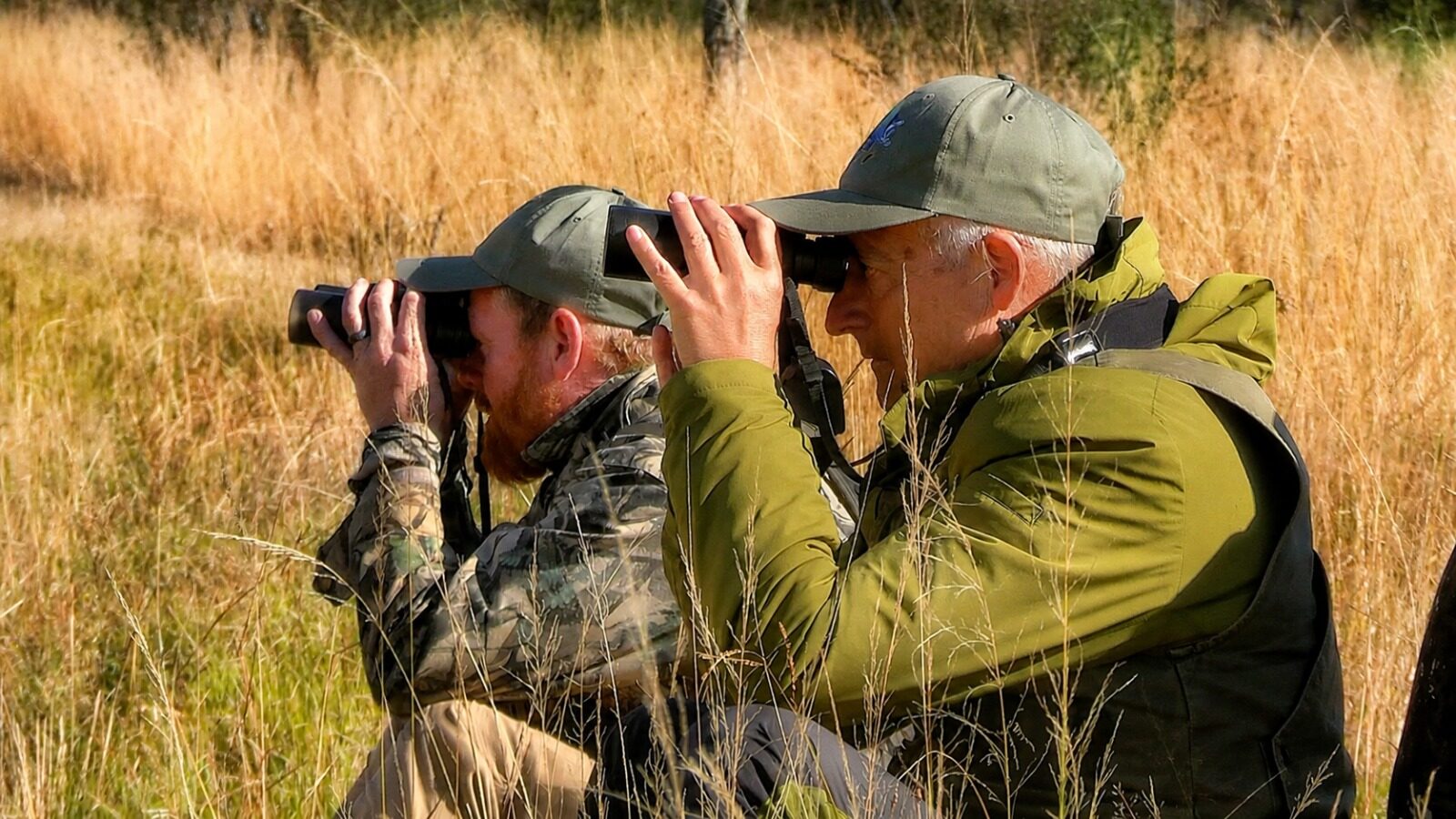
That shapes the day: out before first light to sit quietly near water in the Eastern Cape and Limpopo bushveld, back through the heat, then out again as the light starts to go.
Telling the animals apart matters. Bulls darken to a striking slate grey with spiralling horns, while cows and calves stay rusty red and carry no horns at all — your guide and trackers make sure the right animal is in the scope.
Rifle hire is available if you would rather not travel with your own, and your lodging, meals and trophy export are arranged for you.
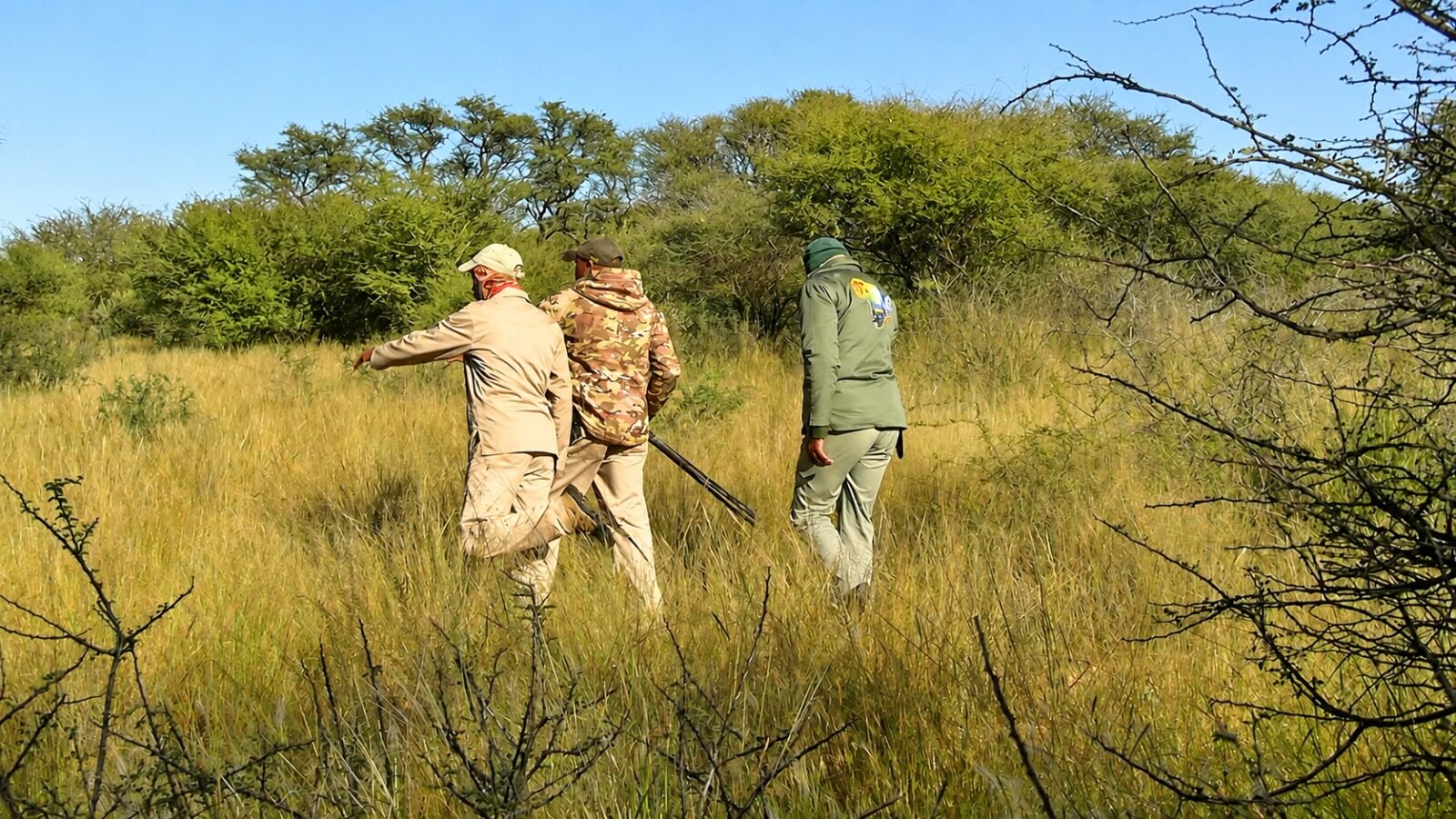
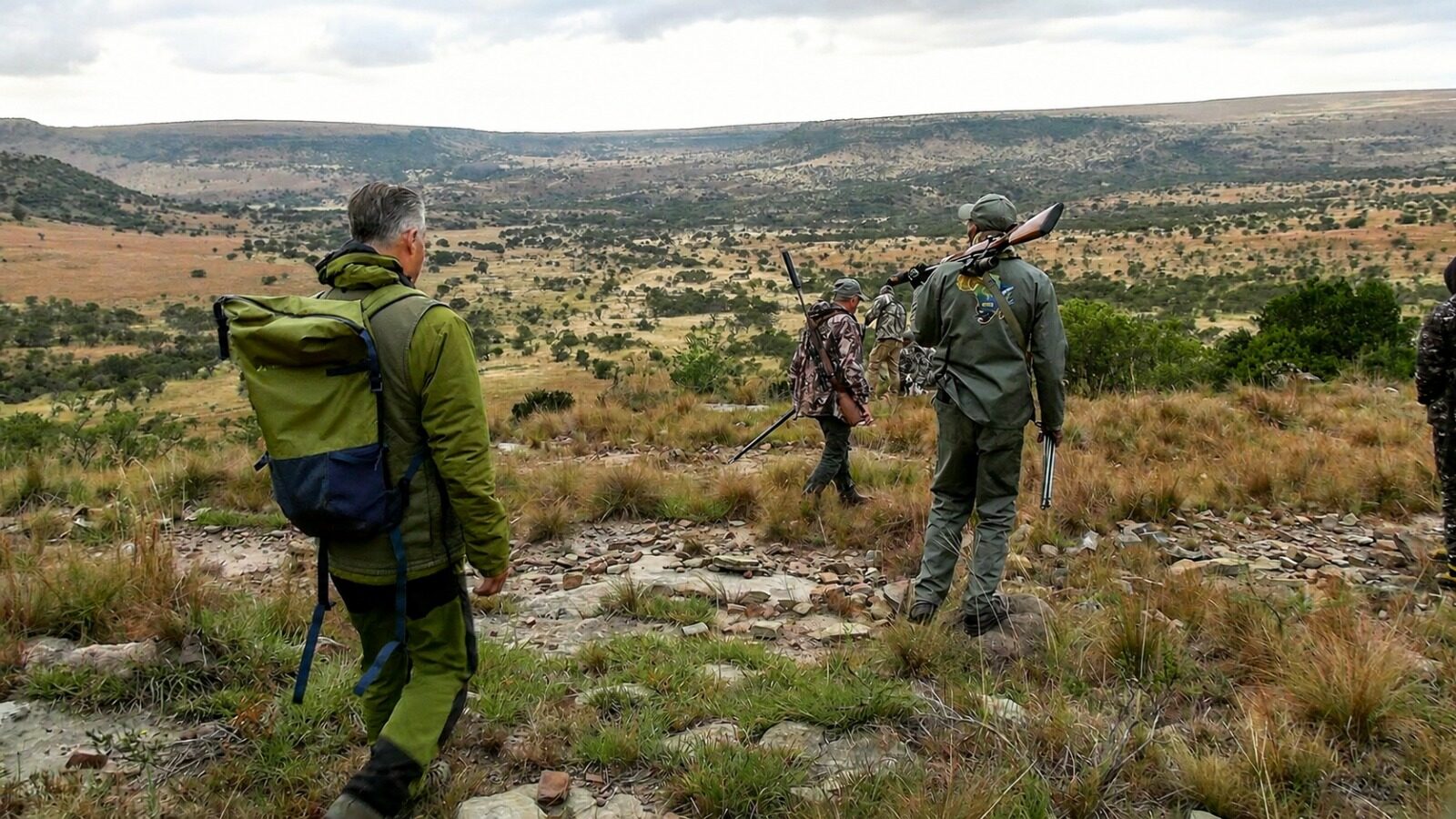
Trackers leading the way towards the thickets.
Dawn and dusk, since nyala are most active in low light and through the night, favouring dense woodland near water.
Bulls darken to a striking slate grey with spiral horns, while cows and calves stay rusty red and are hornless.
In the Eastern Cape and Limpopo bushveld, close to water where nyala prefer to feed.
Yes. Rifle hire is available for guests who need it, as part of your personalised safari package.
Within the South African hunting season, which runs from mid-February to mid-July.
Yes. Trophy export is arranged as part of the trip, and we handle the paperwork once you have flown home.
Tell us roughly when you can travel and who is coming, and we will tell you honestly whether a Nyala hunt fits the days you have.
Rough dates and who is coming is enough to start. No lengthy booking form, no card details.
If the days you have will not cover it, we say so up front and adjust rather than take the booking and disappoint you.
Nothing sold off a shelf. Priced against your dates, group and interests — in USD, Euro or ZAR.
Land-based four to sixteen, live-aboard six to eight, big-game fishing four to five. Never a crowd.
Ask On WhatsApp Request A Quote
We respect your privacy under South Africa’s POPIA. This site does not use advertising cookies. With your permission we use Google Analytics to see which pages are useful; otherwise it uses only what it needs to work and stay secure, plus a few trusted services (Google Fonts, Cloudflare security, and on our Contact page the tools that check phone numbers and dates). Choose what you are happy with — you can change it any time under “Privacy settings” at the foot of every page. Read our Privacy Notice.
Keeps the site working and secure (Cloudflare) and remembers this privacy choice. These cannot be switched off.
Google Analytics shows us which pages are useful and how visitors find us. It sets cookies (_ga) and only runs if you allow this.
Would allow advertising or social-media tracking. We do not use any at present; if we ever do, they only run if you allow this.