
Covering Open Water For Sailfish, Marlin And Tuna.
The simplest way to cover open water — here is what goes into it.
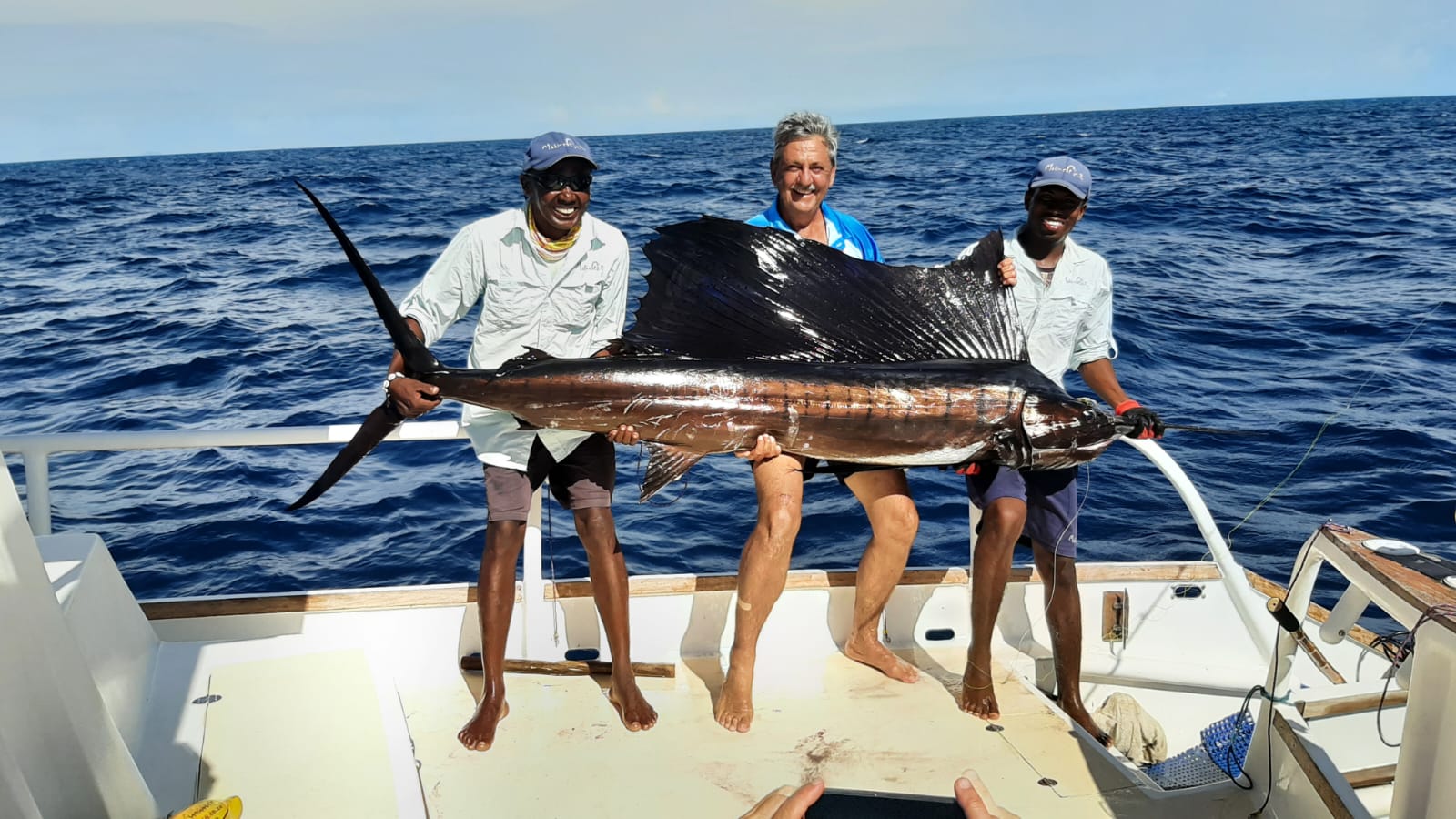
Trolling is how we find fast, wide-ranging fish: sailfish, black marlin, tuna and Giant Trevally out in open water.
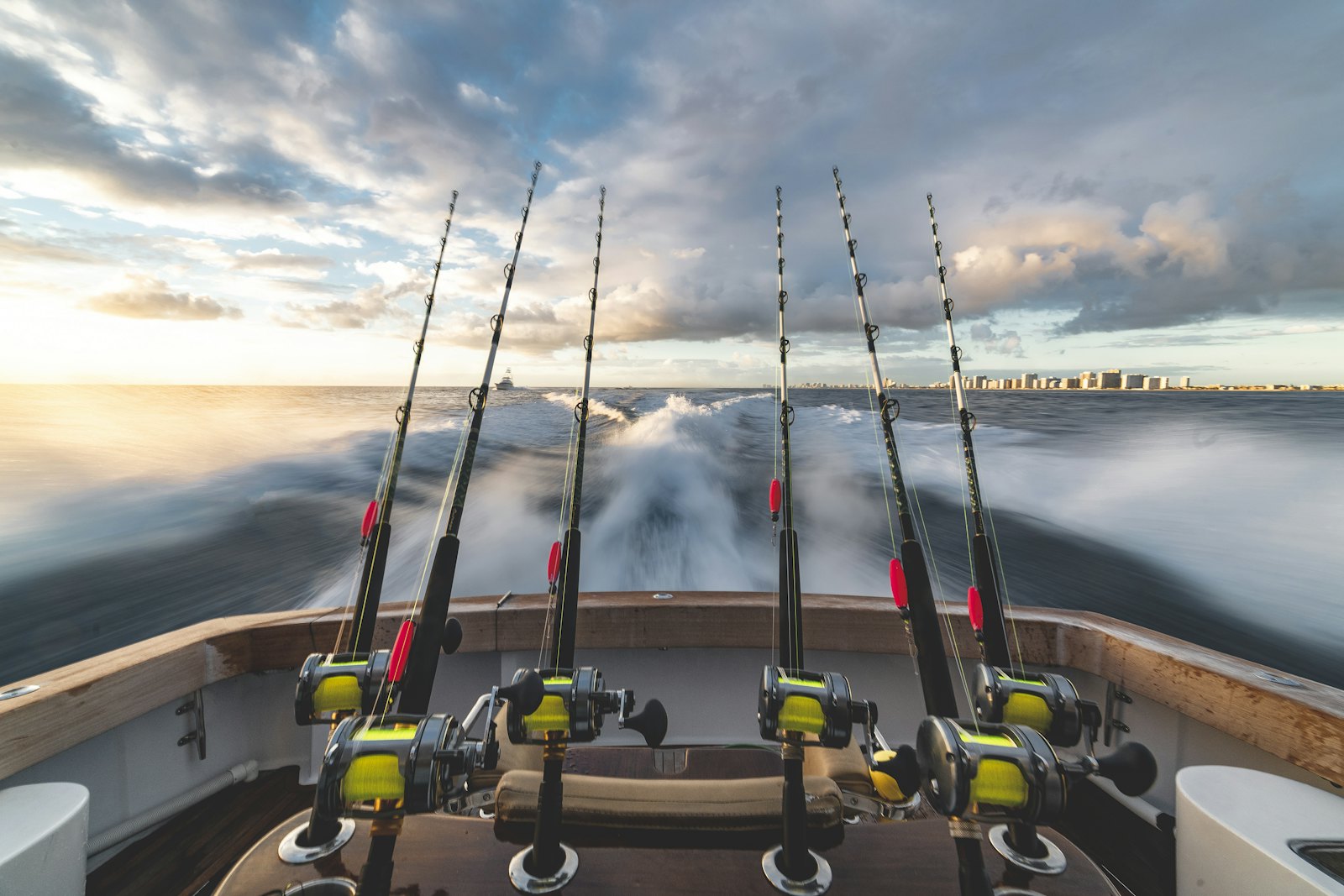
Lines rigged with lures or bait are drawn steadily behind the boat at 4 to 8 knots, slow enough for the lures to swim naturally.
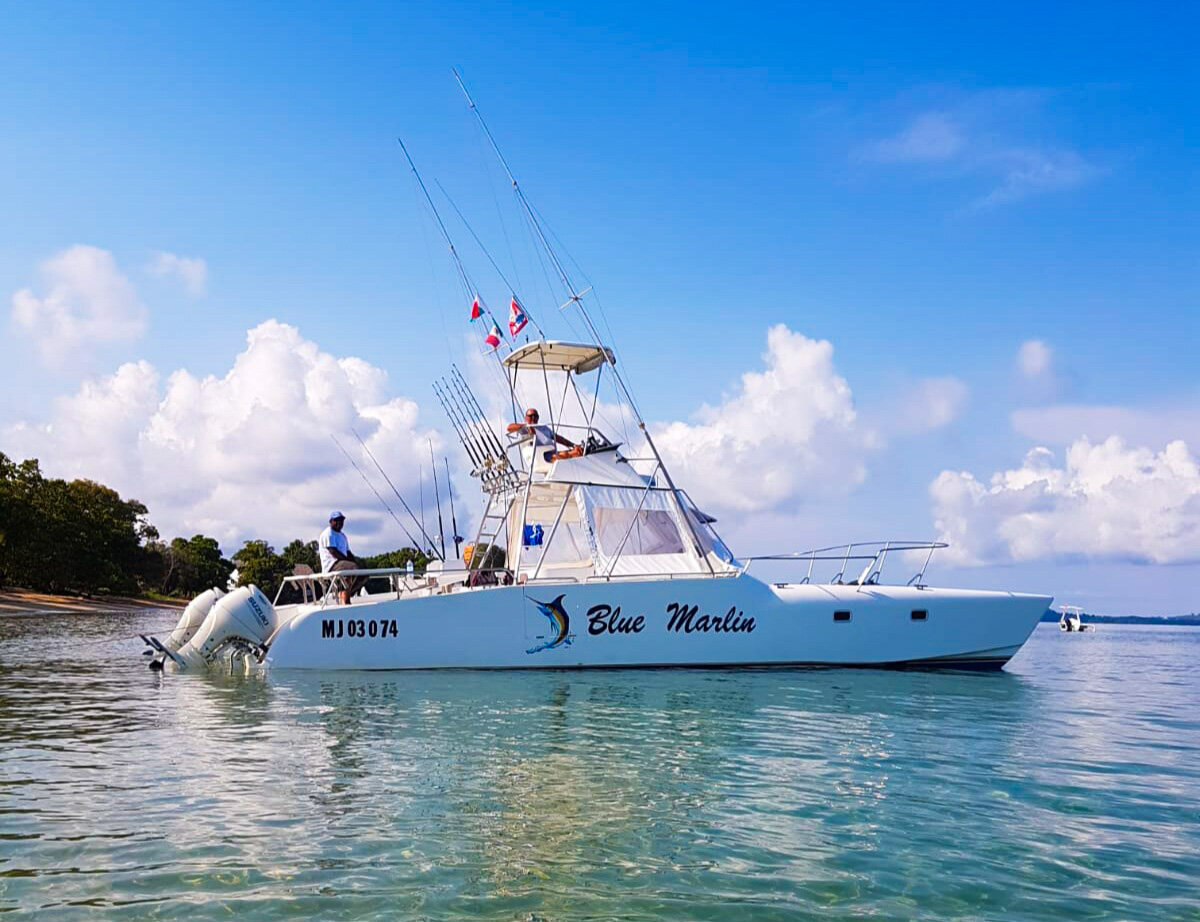
The boat and crew do most of the work of getting a bait in front of a fish, which makes trolling one of the easiest days for a first-time angler.
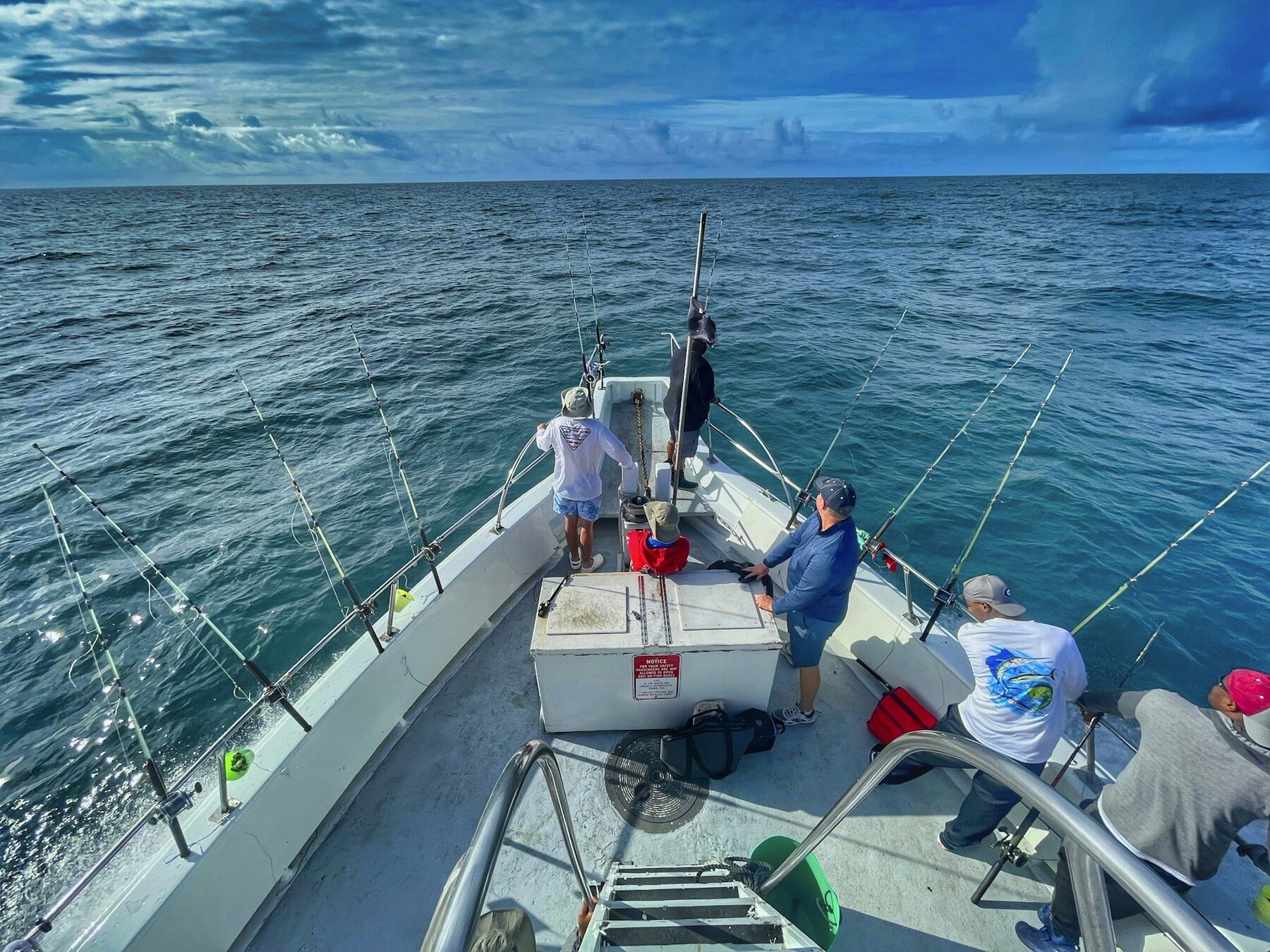
Trips run from 1 April to mid-January, and August and September are the peak billfish months.
Trolling is one of the simplest and most effective ways to find fish across a large stretch of open ocean.
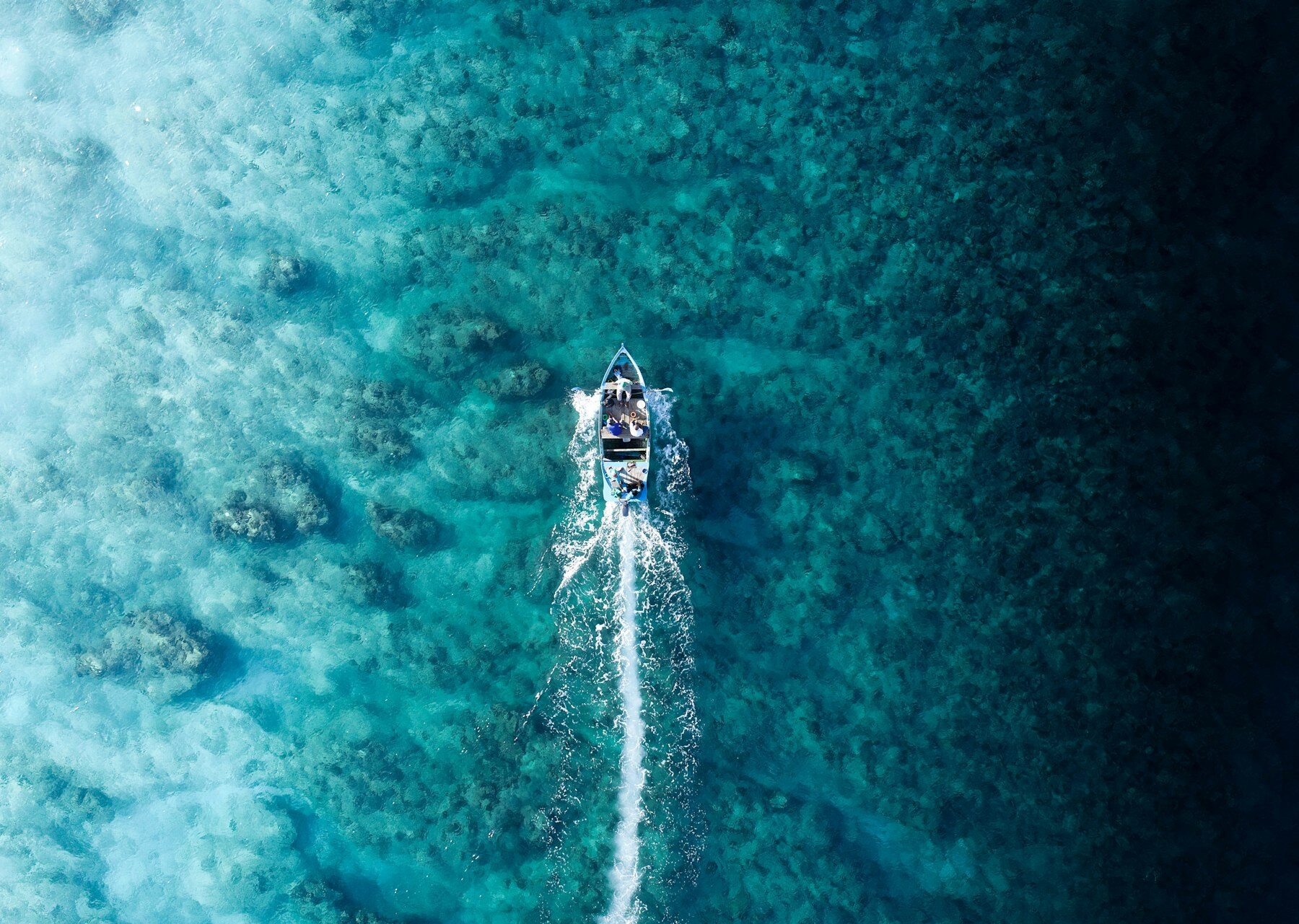
One or more lines, rigged with lures or bait, are drawn steadily through the water behind a slow-moving boat — the motion imitates a fleeing baitfish and triggers the predatory instinct of species patrolling open water. Multiple lines are often run at once, spread wide with outriggers to avoid tangling and kept at different depths, using downriggers where needed, so more of the water column is covered on every pass.
Because it lets a boat search a wide area quickly, trolling is the method of choice for locating fast-moving, wide-ranging species. On a good day the boat may cover many miles before the first strike, reading temperature breaks, current lines and diving birds for signs of bait balls and the predators pushing them to the surface.
Two pages on how a boat covers open water to find fish fast.
 1
Lures or bait are drawn steadily behind a boat at 4 to 8 knots, imitating fleeing baitfish and triggering predators patrolling open water.
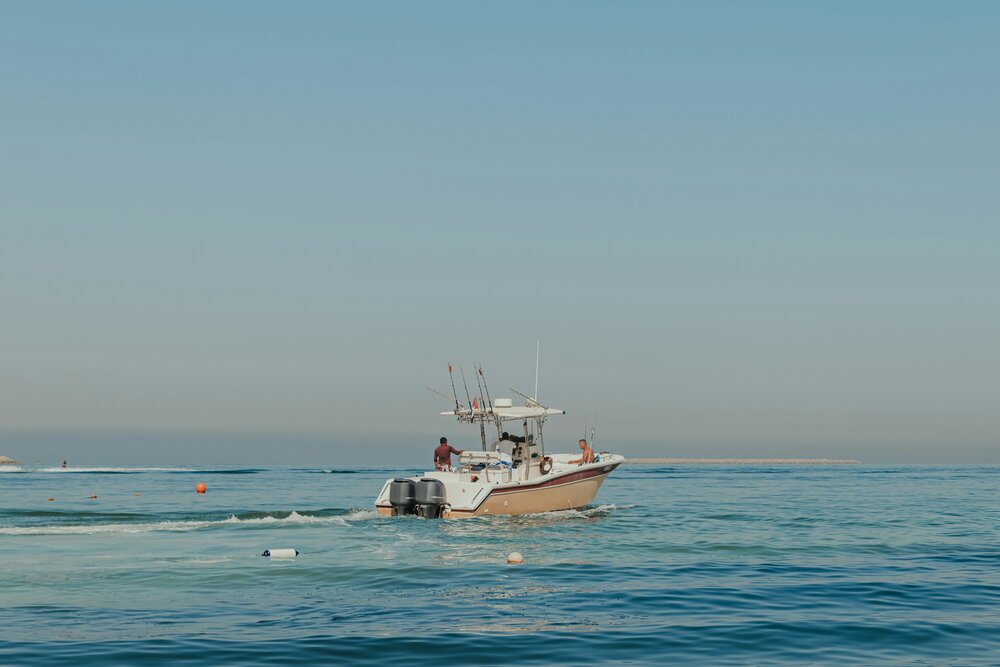
Multiple lines run at once, spread wide on outriggers and set at different depths so more of the water column is covered on every pass.
2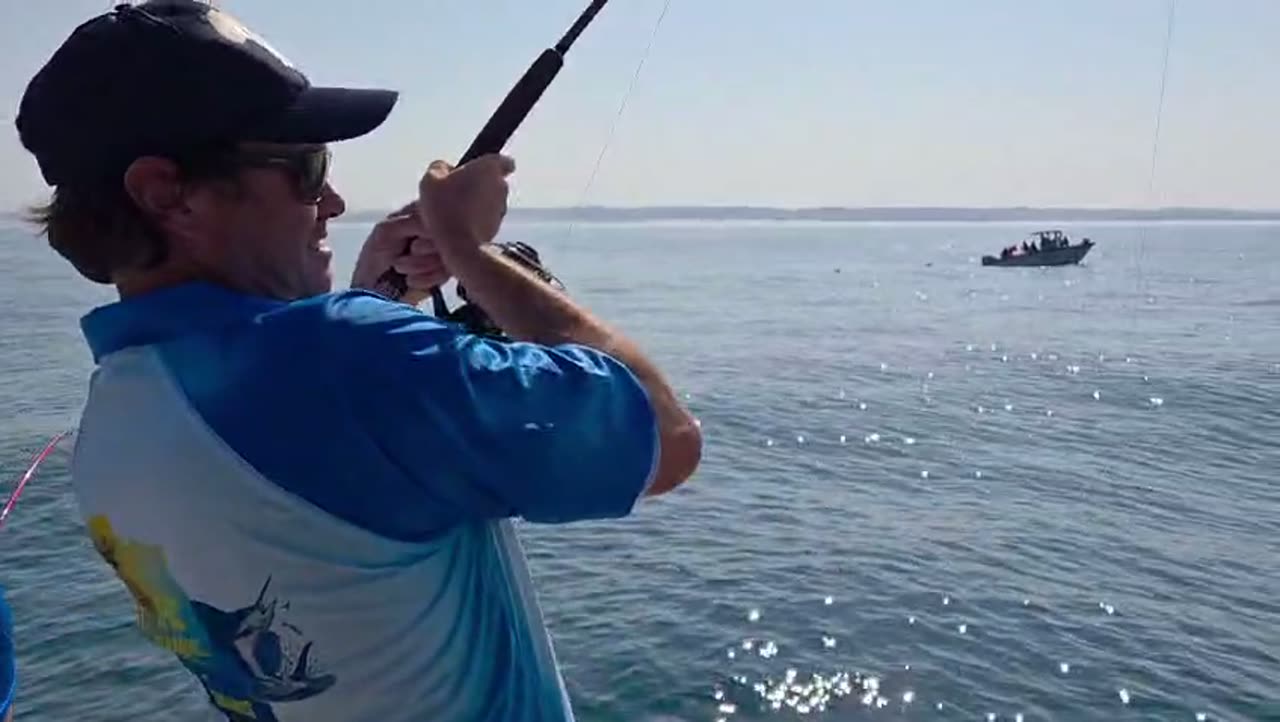 3
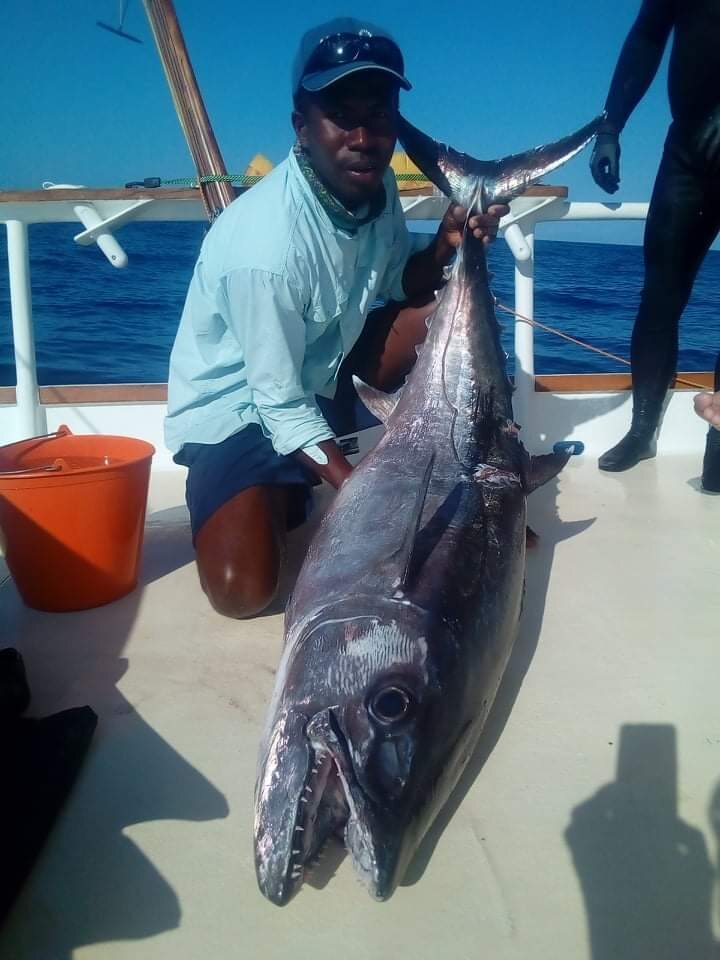
Because it searches ground quickly, trolling is the method of choice for fast-moving, wide-ranging species — sailfish, black marlin, tuna and Giant Trevally.
The crew reads temperature breaks, current lines and diving birds to put the spread where the bait is.
4
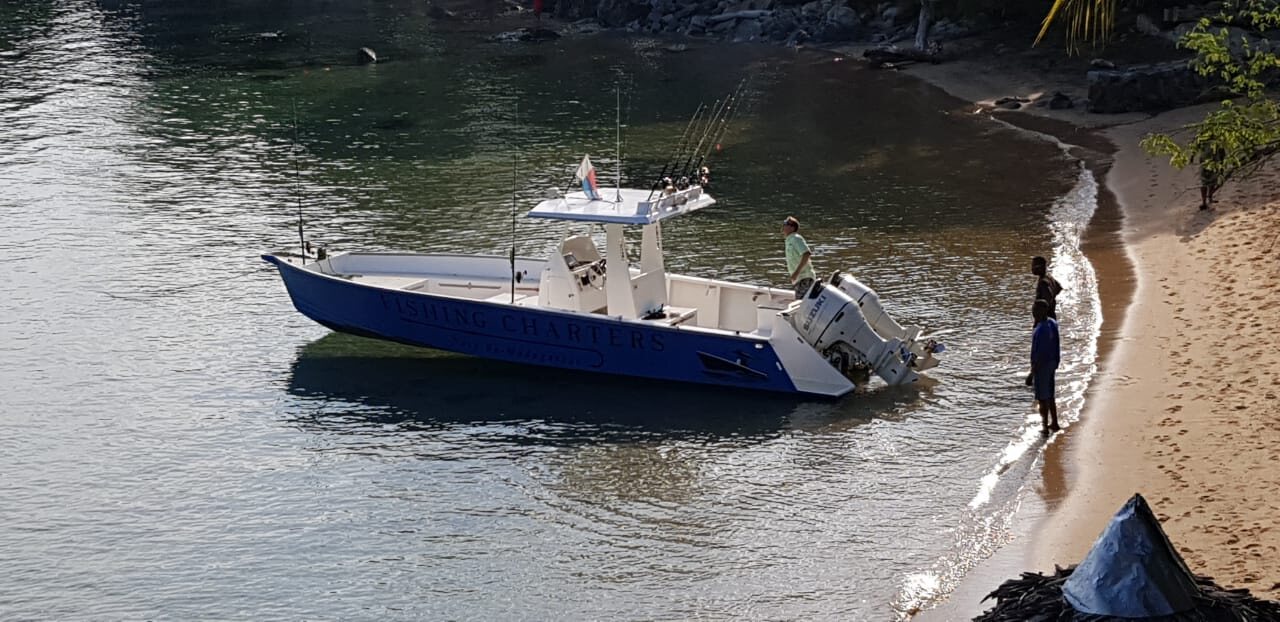
Trolling is a searching technique first — it is how a boat covers ground to find fish before switching to a more targeted method. It rewards patience over a full day on the water and works well early or late when pelagic species are moving through open water.
Trolling is how we cover open water fast: lines rigged with lures or bait drawn steadily behind a slow-moving boat until the birds and the bait show us where the fish are.
It is the way to find the fast, wide-ranging species — Giant Trevally, black marlin, sailfish and tuna — and one of the most beginner-friendly days we run, because the boat and crew do most of the work of getting a bait in front of a fish.
We run at roughly 4 to 8 knots, slow enough for lures to swim naturally. Trips run from 1 April to mid-January, with peak billfishing in August and September.
Take a half day if you are combining it with the island, or a full day for the best chance at the bigger pelagics. Tackle and crew come with it, we practise tag and release, and it works land-based or from a live-aboard.
Send us your dates and group size. We will tell you what is running then, and whether Trolling is the right call for that week.
Rough dates and who is coming is enough to start. No lengthy booking form, no card details.
If the days you have will not cover it, we say so up front and adjust rather than take the booking and disappoint you.
Nothing sold off a shelf. Priced against your dates, group and interests — in USD, Euro or ZAR.
Ask On WhatsApp Request A Quote
Real footage from our boat — a guest hooked up off Nosy Be.
One or more lines, rigged with lures or bait, are drawn steadily through the water behind a slow-moving boat to search open water quickly.
Fast-moving, wide-ranging species such as Giant Trevally, Black Marlin, Sailfish and Tuna.
No — it's one of the most beginner-friendly techniques we offer, since the boat and crew do most of the work getting a bait in front of fish.
Typically 4 to 8 knots, slow enough for lures to swim naturally while still covering a wide stretch of open water.
Trips run from 1 April to mid-January, with peak billfishing in August and September. There are no tours from mid-January to the end of March.
Both are available — a half day suits guests combining it with other activities, while a full day gives the best chance at covering enough water for the bigger pelagic species.
Come and discover the wild beauty, culture, adventure and hospitality of Africa — and create stories you will tell for years to come.
Start Planning“Live life to the fullest; tomorrow may never come.”
We respect your privacy under South Africa’s POPIA. This site does not use advertising cookies. With your permission we use Google Analytics to see which pages are useful; otherwise it uses only what it needs to work and stay secure, plus a few trusted services (Google Fonts, Cloudflare security, and on our Contact page the tools that check phone numbers and dates). Choose what you are happy with — you can change it any time under “Privacy settings” at the foot of every page. Read our Privacy Notice.
Keeps the site working and secure (Cloudflare) and remembers this privacy choice. These cannot be switched off.
Google Analytics shows us which pages are useful and how visitors find us. It sets cookies (_ga) and only runs if you allow this.
Would allow advertising or social-media tracking. We do not use any at present; if we ever do, they only run if you allow this.