
The Sighting Every Guest Hopes For.
A few things that make the difference between a glimpse and a sighting worth staying with.
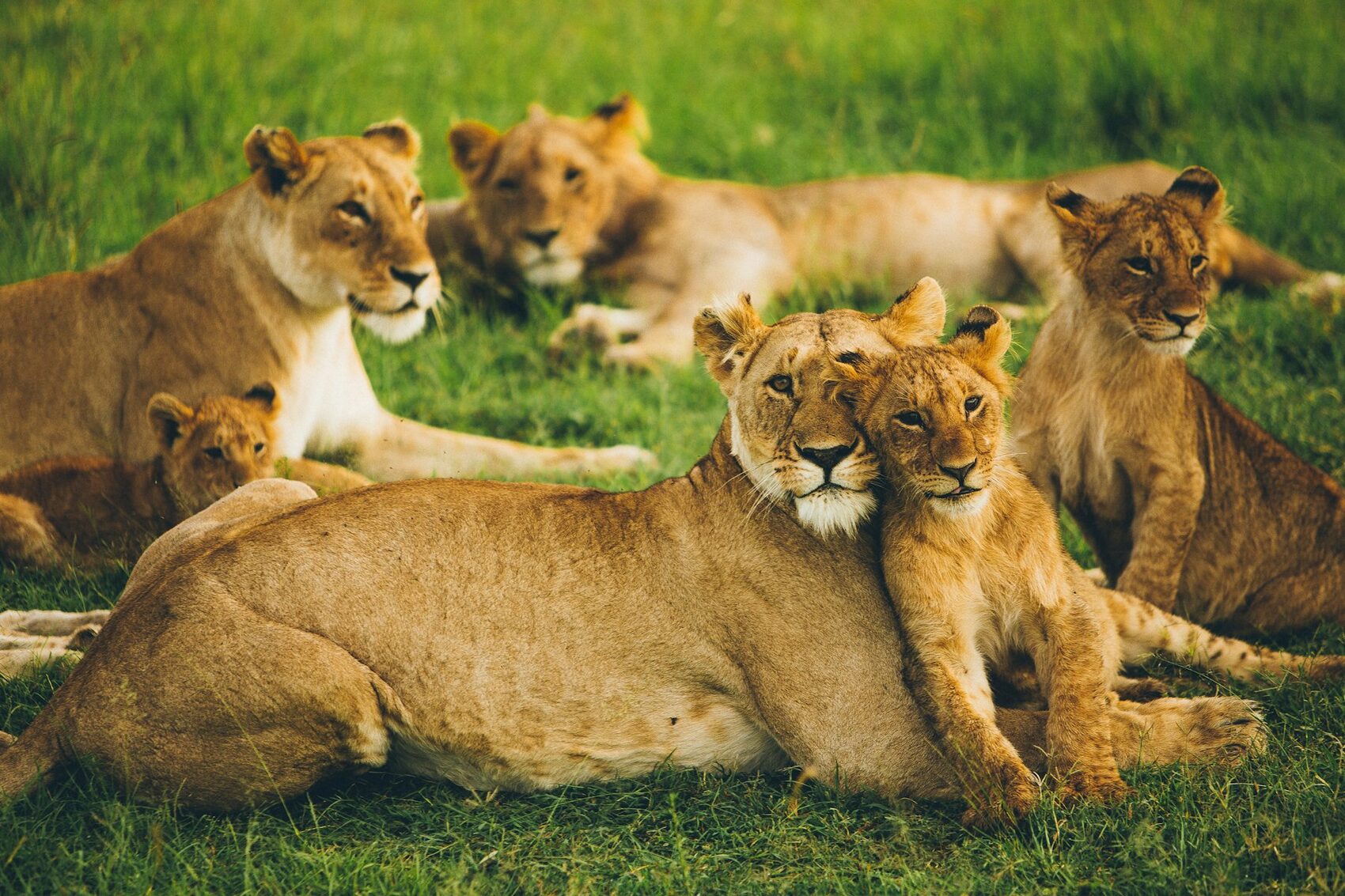
A pride is built around related females, their cubs and the males holding the territory — though they often split up for days at a time.
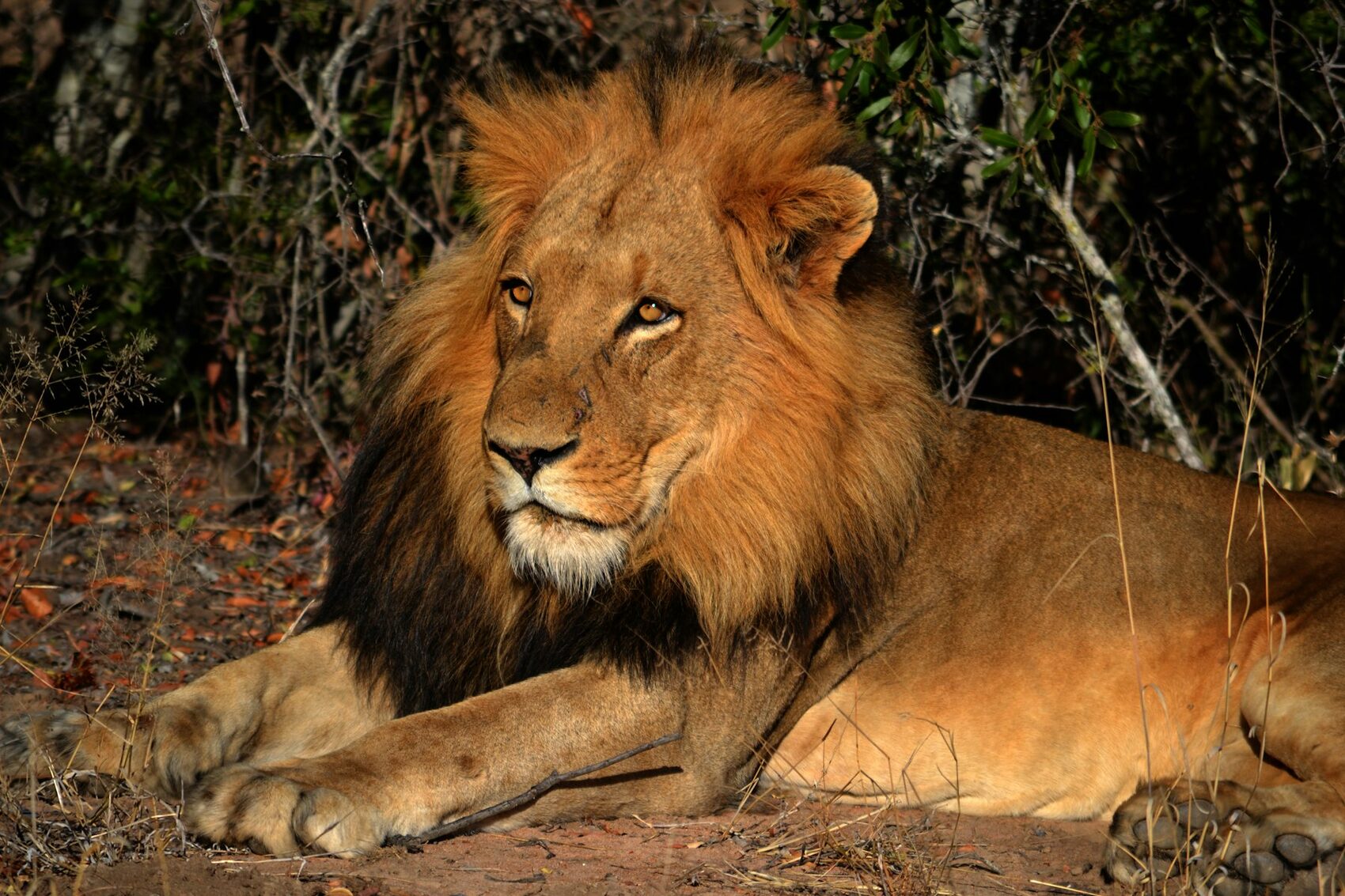
Lions rest for around 20 hours a day and are most active from dusk into first light, so dawn and last-light drives are worth far more than midday.
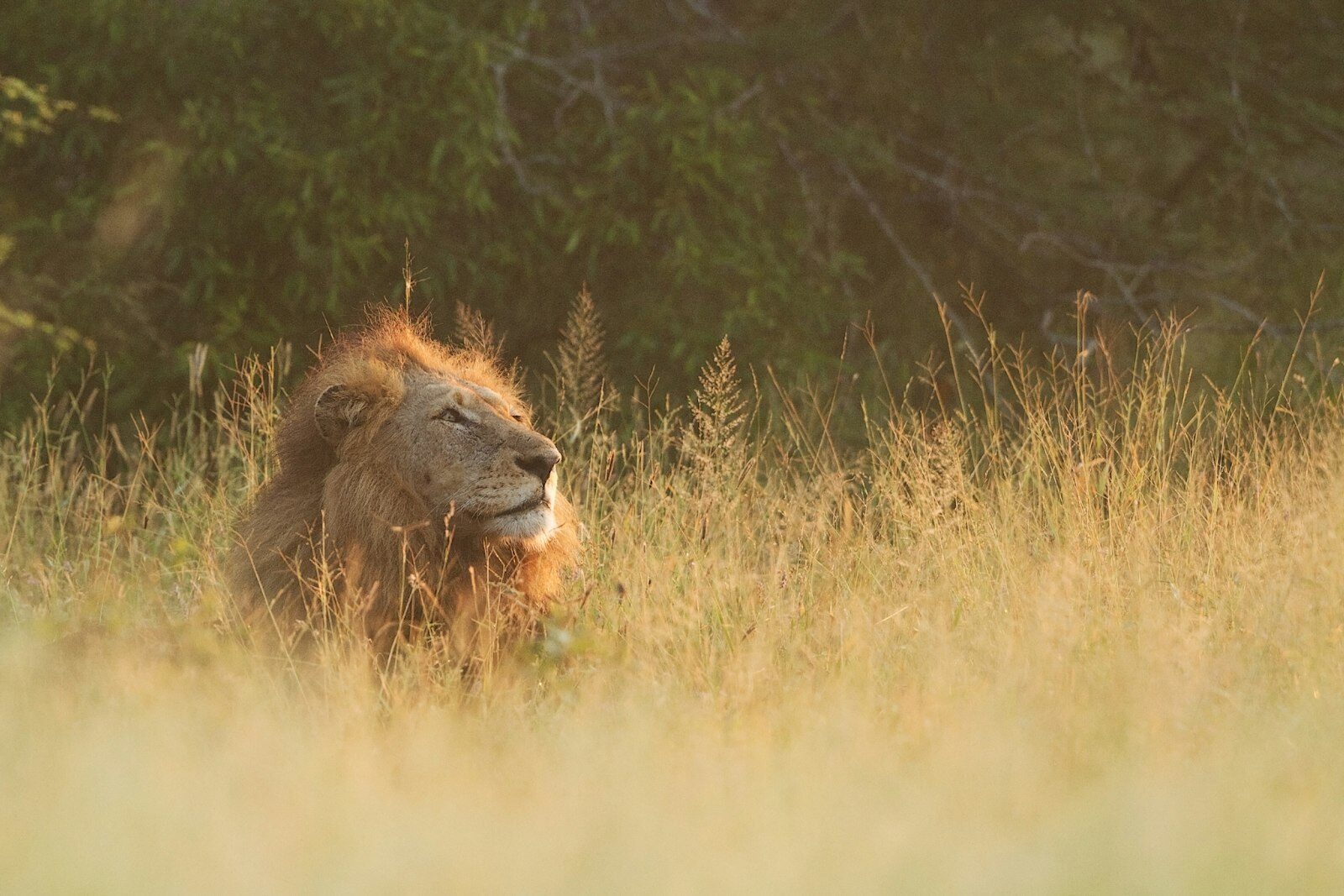
Most of South Africa’s lions live in protected areas: Kruger and the Lowveld, the Kalahari, Madikwe and Pilanesberg.
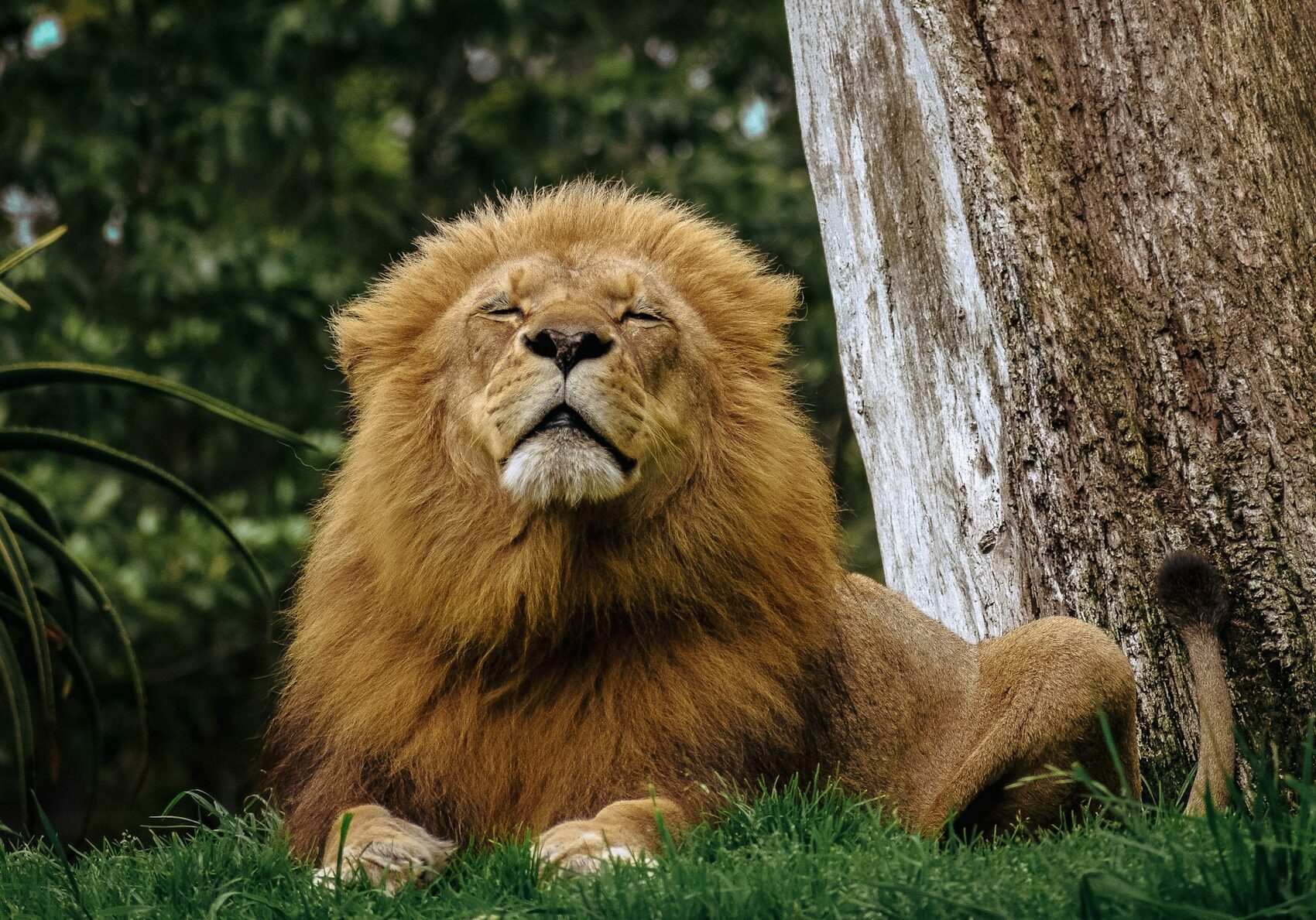
The African lion is listed as Vulnerable on the IUCN Red List. Males weigh about 190 to 225kg and females about 120 to 180kg.
Fly into Johannesburg or Cape Town and connect on to Gqeberha, East London, George or Polokwane. Seasons, what to pack and how the hunting season runs from mid-February to mid-July.
SA Airlink flies Johannesburg to Nosy Be direct, early on Tuesday mornings. Never book via Antananarivo on the mainland.
Nosy Be Flight RoutesThe lion is the animal almost every guest hopes to see, and the one that changes the mood of a vehicle the moment it appears. It is also the only cat on earth that lives in a family group, which is what makes a sighting worth staying with rather than photographing and driving on.
This page is about watching them. What a pride actually is, why the lionesses do the hunting, what the mane tells you, and when in the day you have a real chance of seeing any of it. Lions are the headline sighting on our South Africa photographic safaris and game drives.
Ten pages on Africa’s only social cat — the pride, the hunt, the cubs, and how to actually find them in the field.
 1
A male lion stands about 1.2m at the shoulder and weighs roughly 190 to 225kg; a lioness is lighter at around 120 to 180kg. They are the second-largest cat on earth after the tiger, and the only one that truly lives in groups.
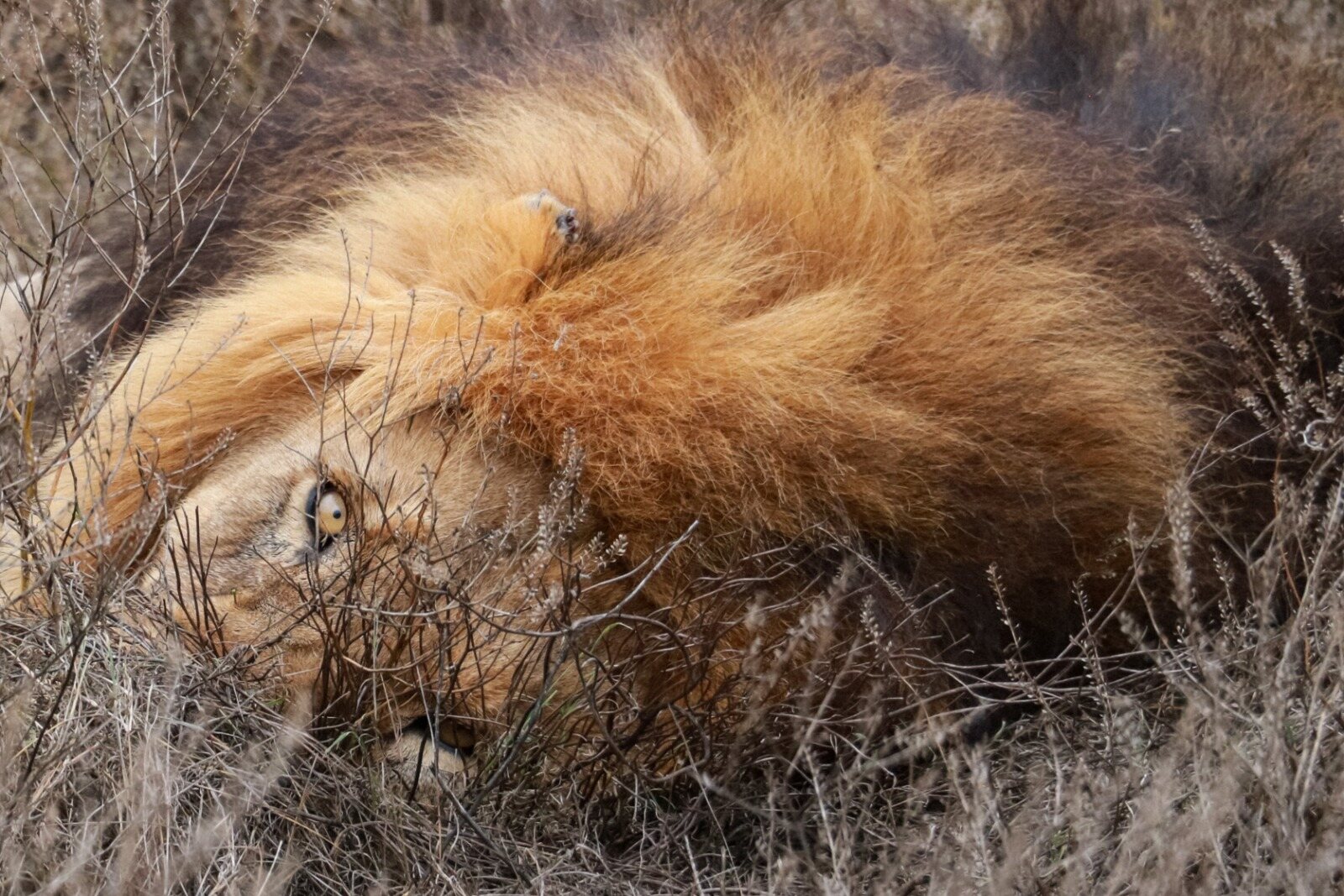
The mane is the giveaway. It starts as a fringe at around two years old and keeps darkening and thickening with age, so a black-maned male is usually a lion in his prime rather than simply an old one.
2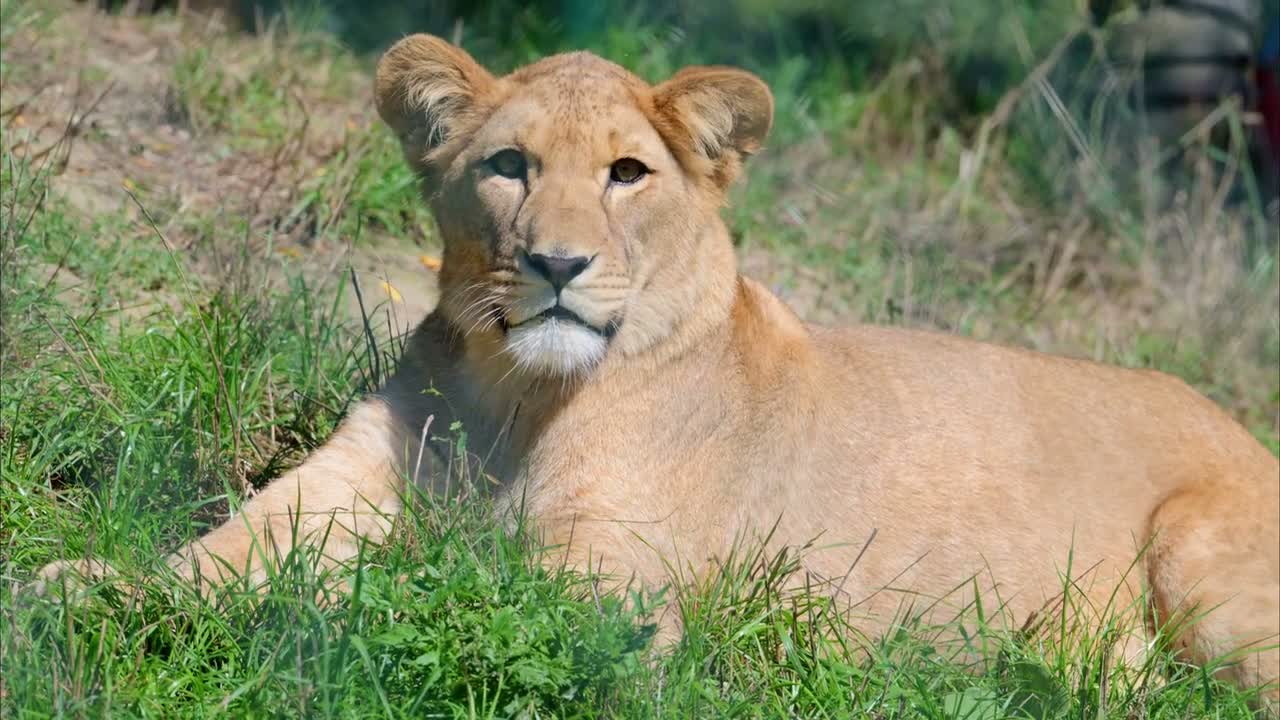 3
A pride is built around related females — sisters, mothers, daughters, cousins — who stay in the territory they were born in for life. Add their cubs and the males currently holding the territory and you have the whole group.
Prides on good ground commonly run to around fifteen animals, though they are rarely all in one place. They split into smaller parties for days at a time and come back together, which is why your sighting may be three lions rather than fifteen.
4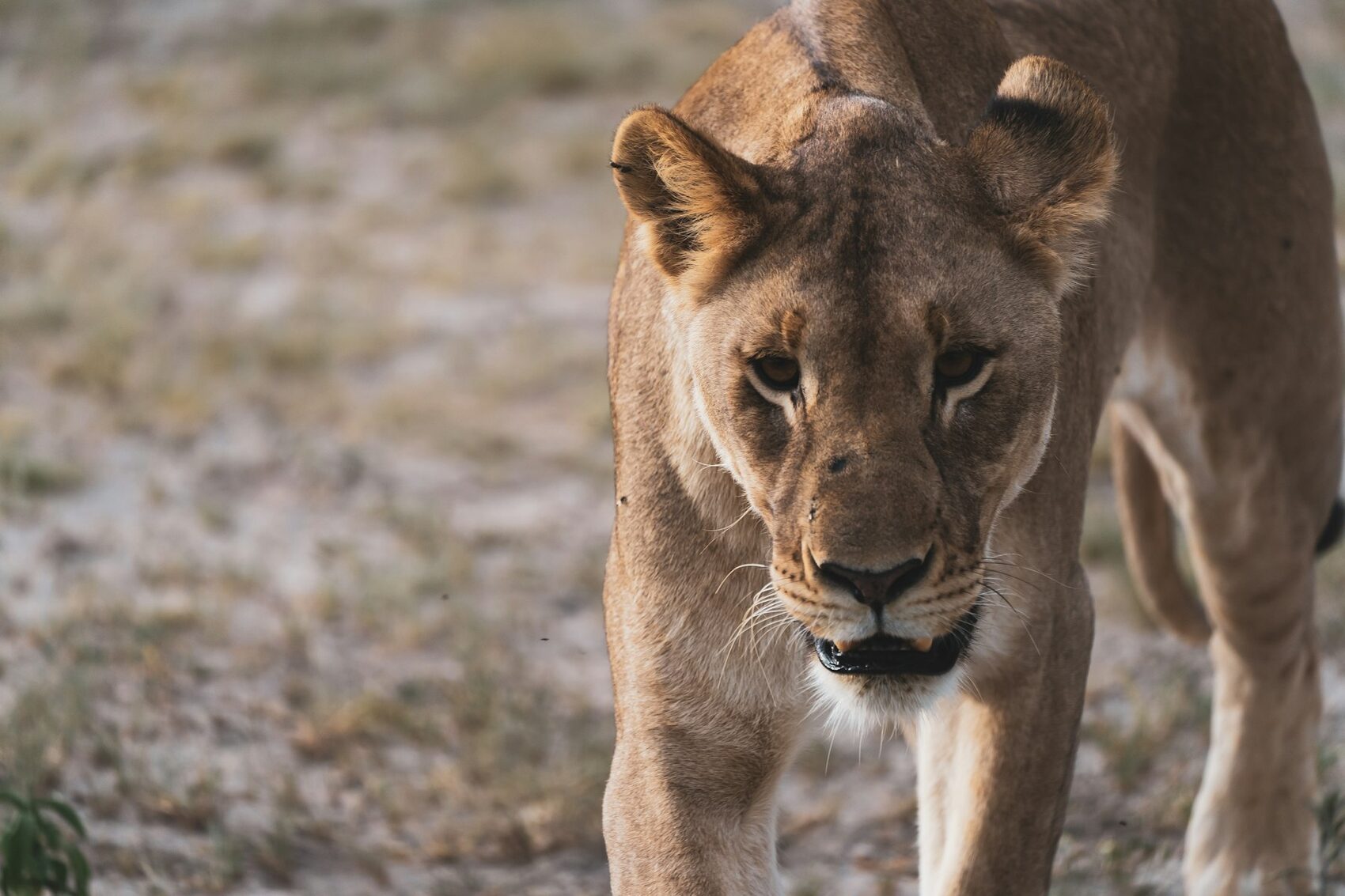 5
Most hunting is done by the females, and often together. They are ambush hunters, not distance runners — the whole approach is about closing to within about thirty metres before anything commits.
Cooperating lets them take prey far larger than themselves, from wildebeest and zebra up to buffalo. Even so, most attempts fail, which is the part that surprises people most about watching lions.
6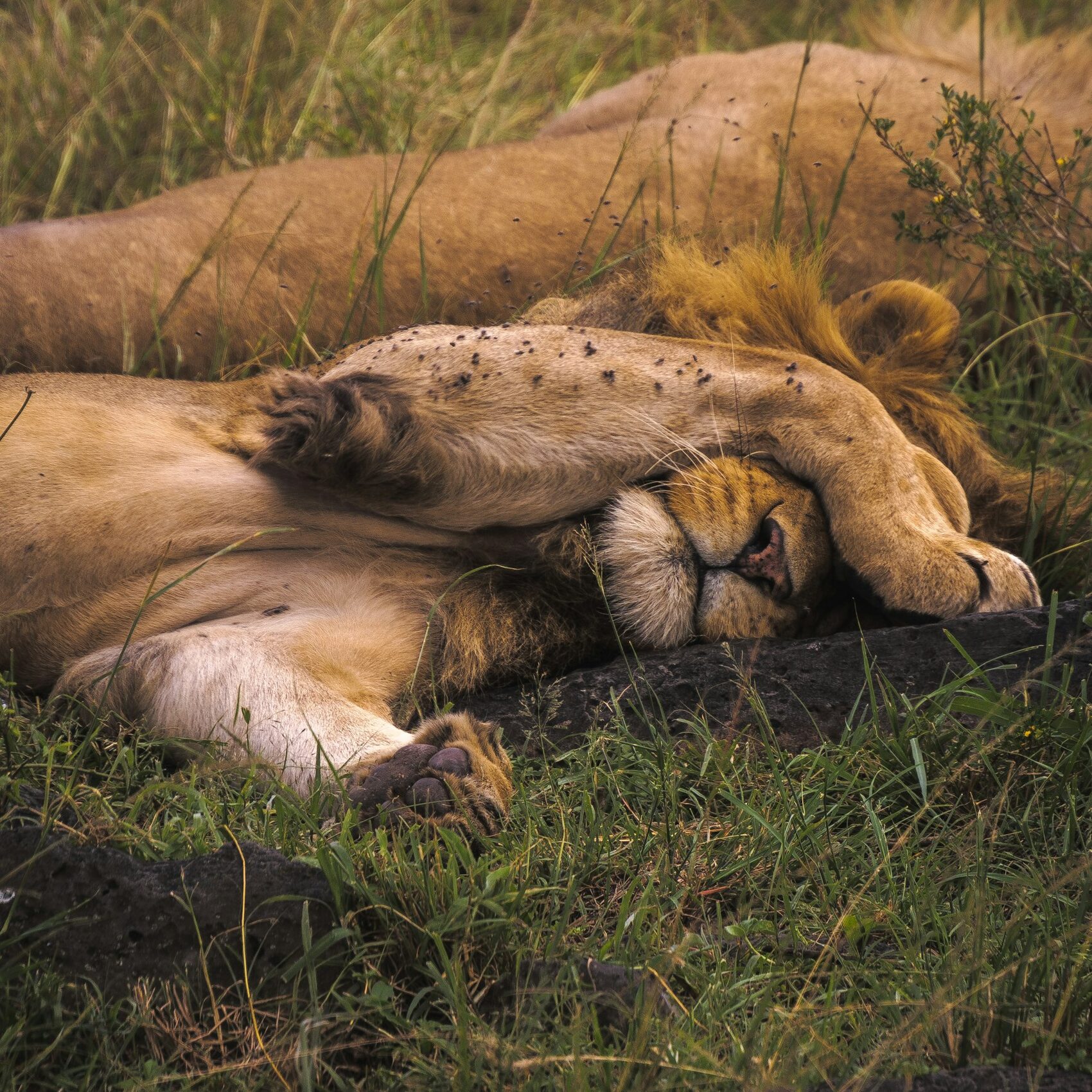 7
Lions rest for around twenty hours a day. That is not laziness; it is energy management for an animal that hunts in short, expensive bursts and often goes days between meals.
It also sets your expectations honestly. If you find lions at midday you will almost certainly find them flat on their sides in shade. The animal you picture in a documentary is the other four hours.
8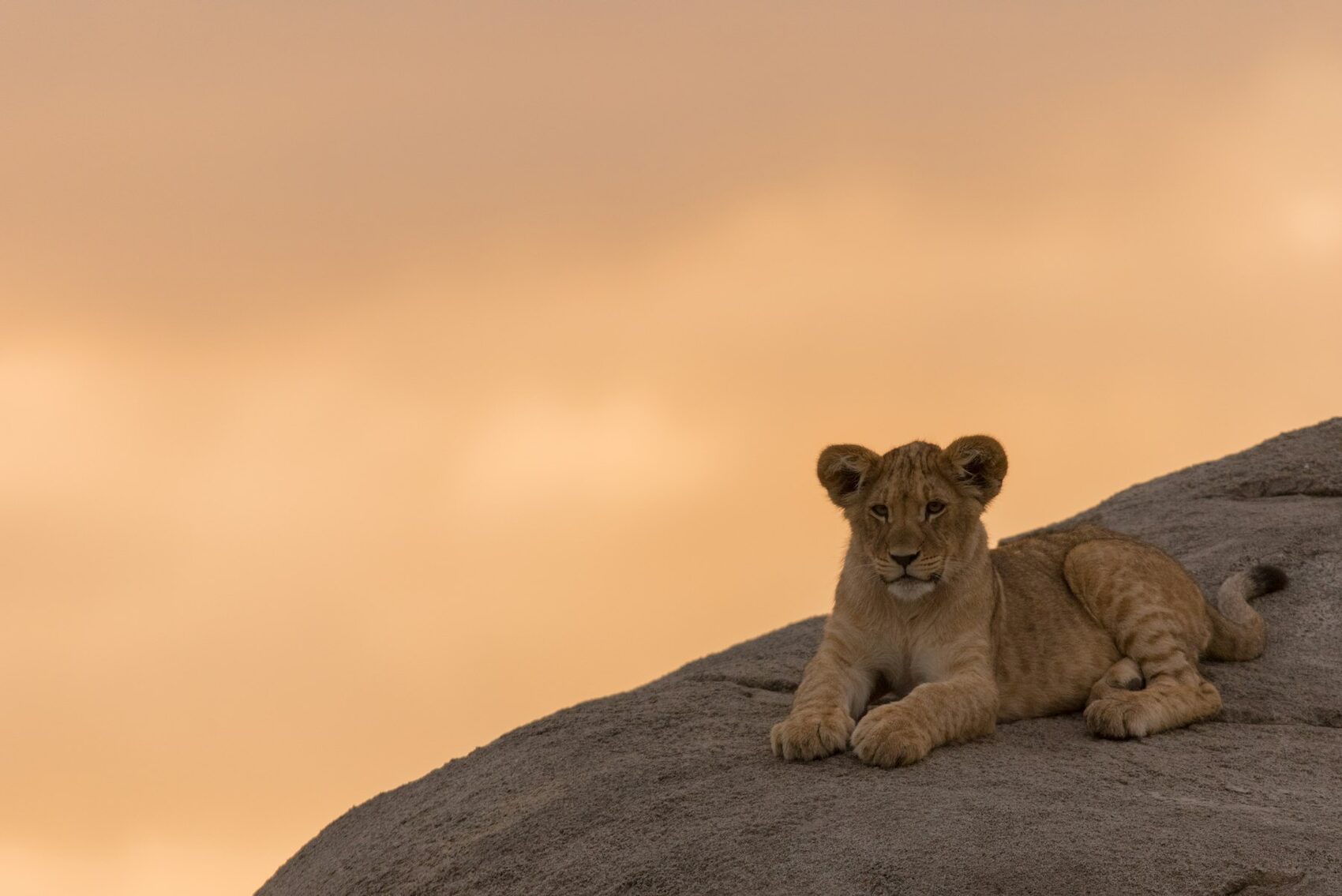 9
Lions favour open woodland, savanna and grassland where there is game to hunt, shade to lie up in and water within reach. They are not forest animals, and they are not desert animals in the way gemsbok are.
In South Africa the strongholds are Kruger and the greater Lowveld, the Kalahari of the Northern Cape, and reserves such as Madikwe and Pilanesberg. Most of the country’s lions live inside protected areas.
10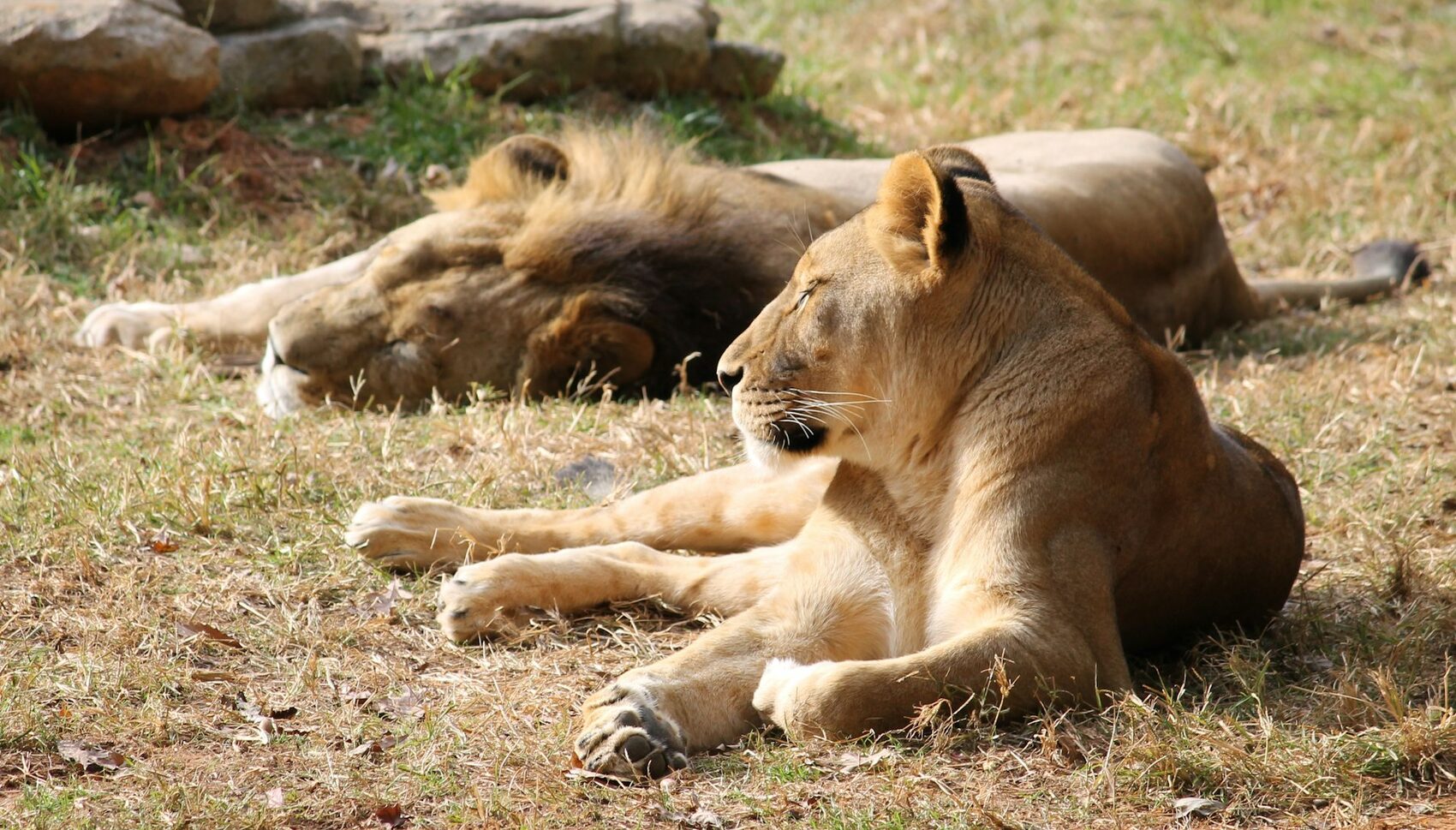 11
Males usually team up in coalitions, most often brothers who left their birth pride together at around three years old. Two or three males hold a territory far more securely than one ever could.
That tenure is short. A coalition may hold a pride for only a couple of years before a stronger group pushes them out, which is why a big male’s life is far more precarious than his appearance suggests.
12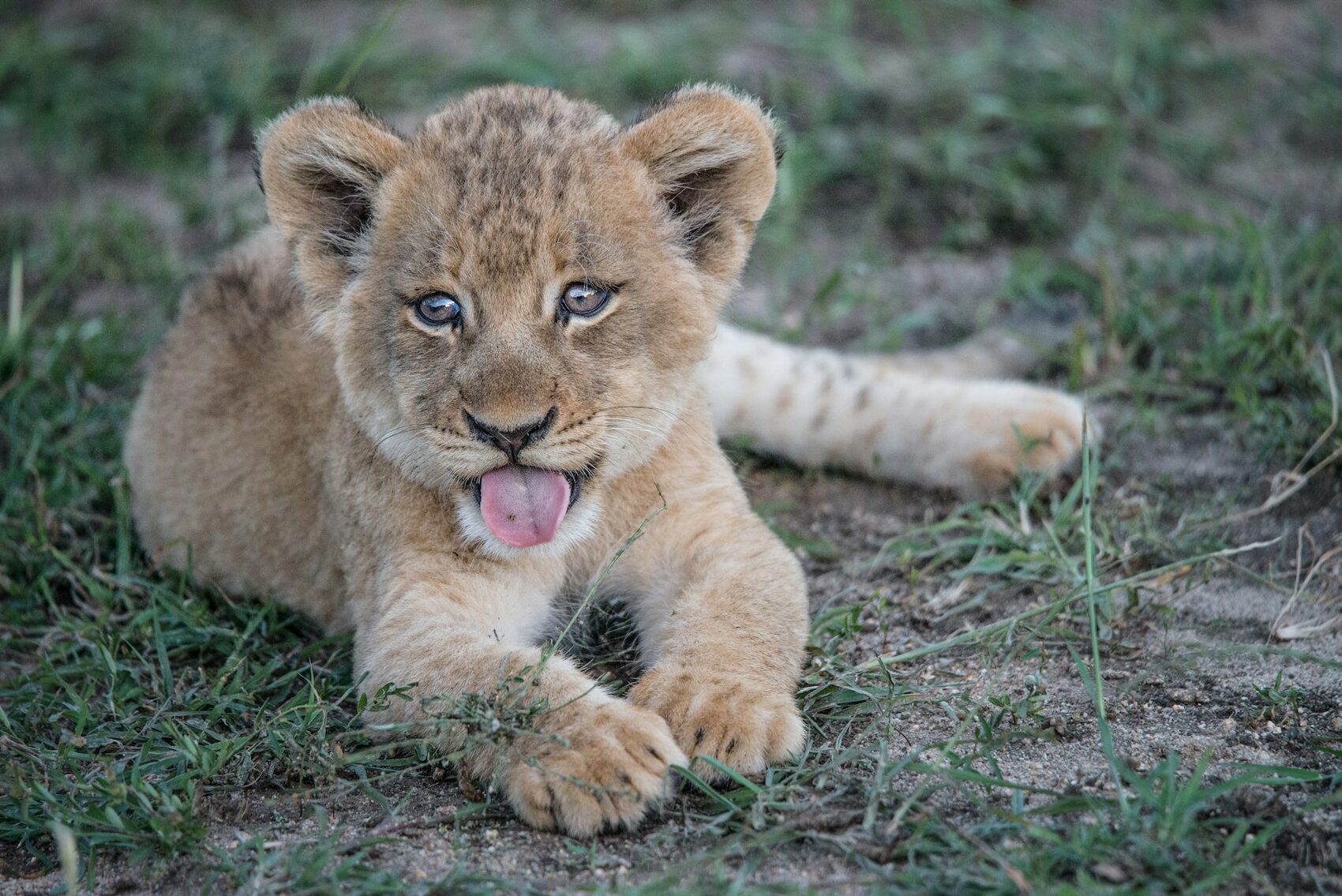 13
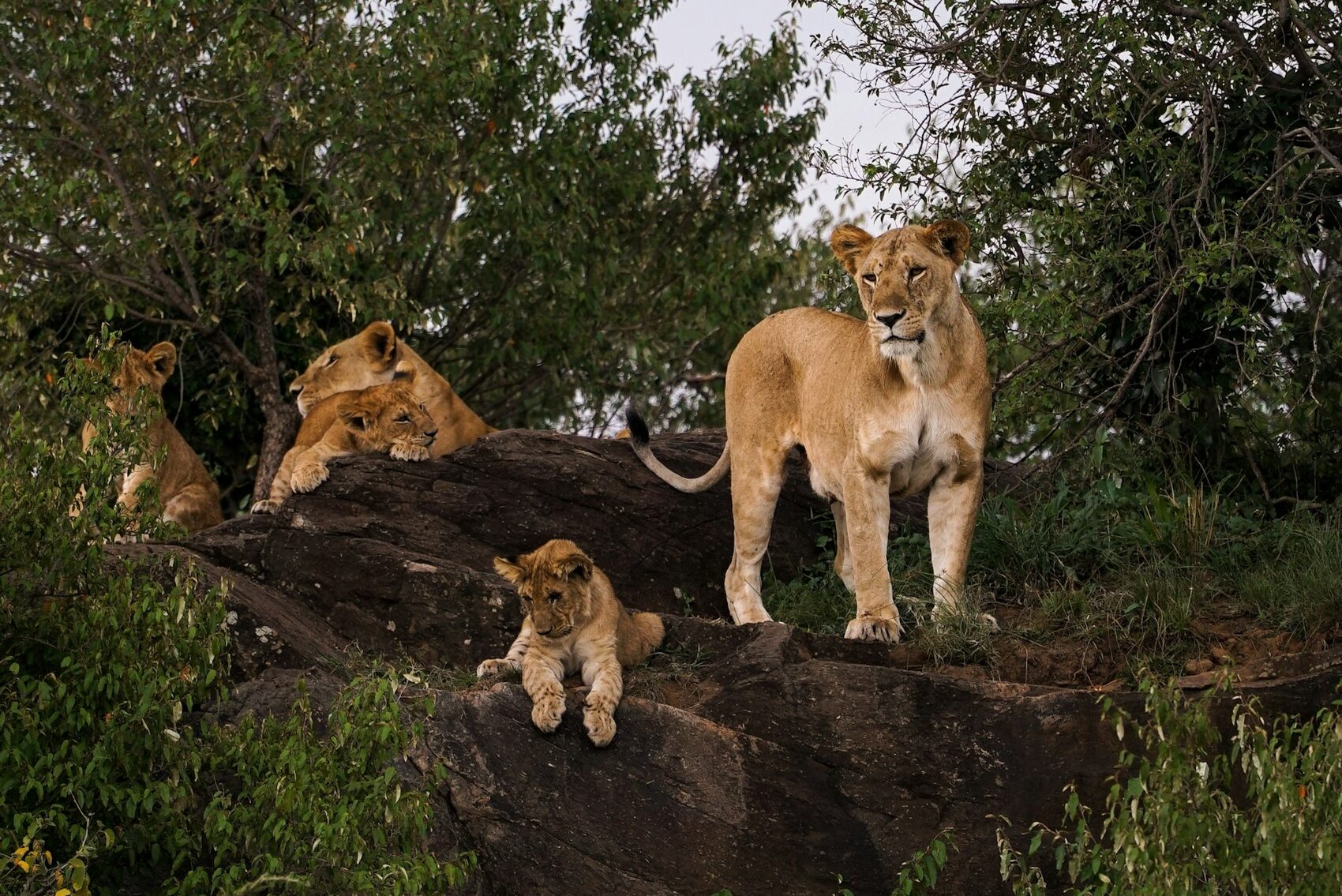
Cubs arrive after about a hundred and ten days, usually two to four at a time, and the lioness keeps them hidden in thick cover for the first six weeks or so before she introduces them to the pride.
Once they are in, mothers will suckle each other’s cubs and the litters are raised as one crche. It is a real advantage, and it is also why cubs of slightly different ages so often turn up in the same sighting.
14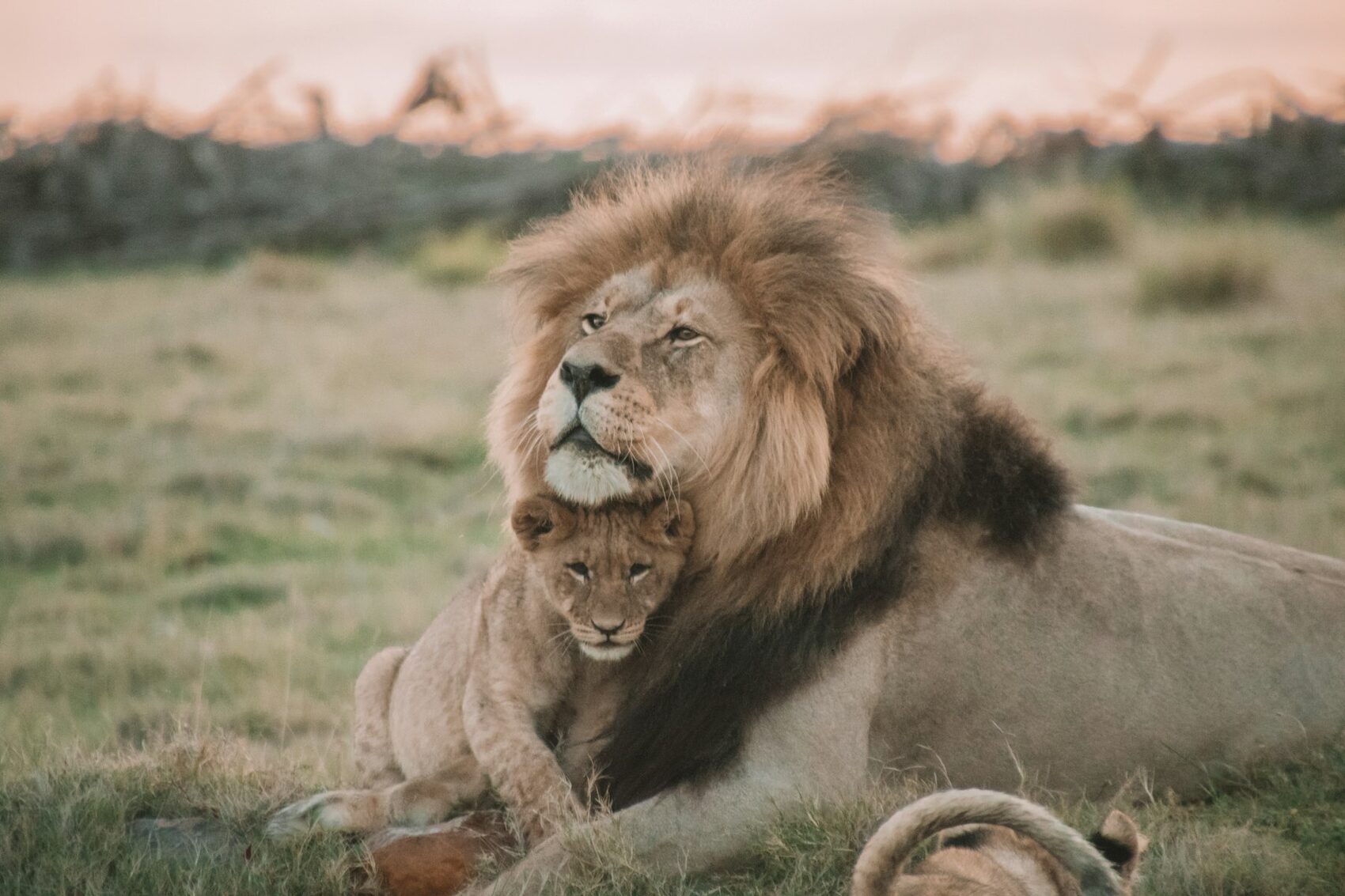 15
Males are surprisingly tolerant of cubs in their own pride, and you will often see one lying flat while youngsters climb over him. His job is the territory rather than the parenting.
That tolerance ends. Young males are pushed out at around two to three years old and spend a nomadic stretch on the edges of other territories before they are strong enough to take ground of their own.
16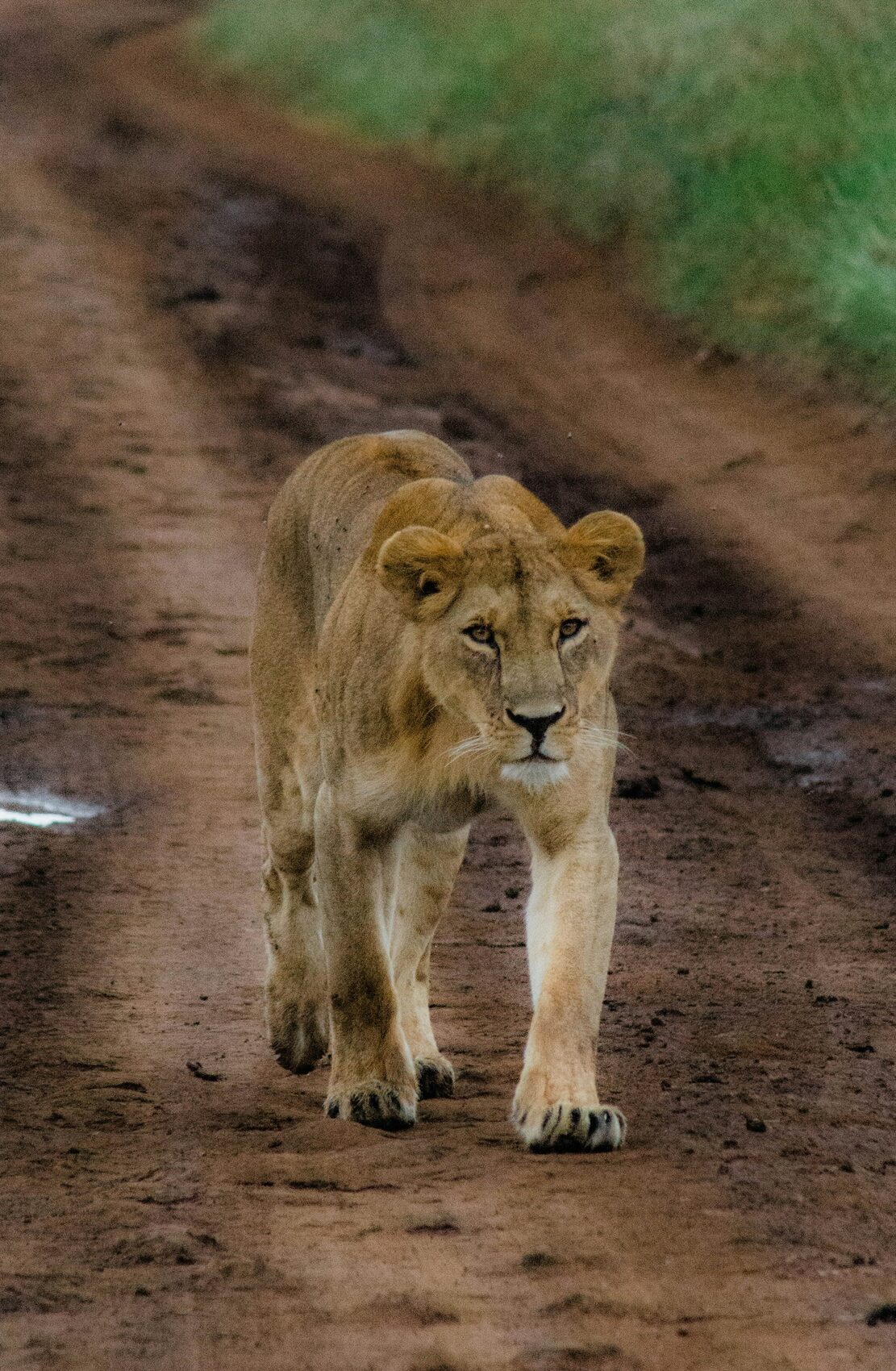 17
Lions take the path of least resistance, which on a reserve means game-viewing tracks, sandy riverbeds and firebreaks. Walking a road costs far less energy than pushing through thornbush.
It is the single most useful thing to know as a guest. Tracks in the sand at first light tell your guide which way the pride went and roughly how long ago — and that is usually how a morning sighting begins.
18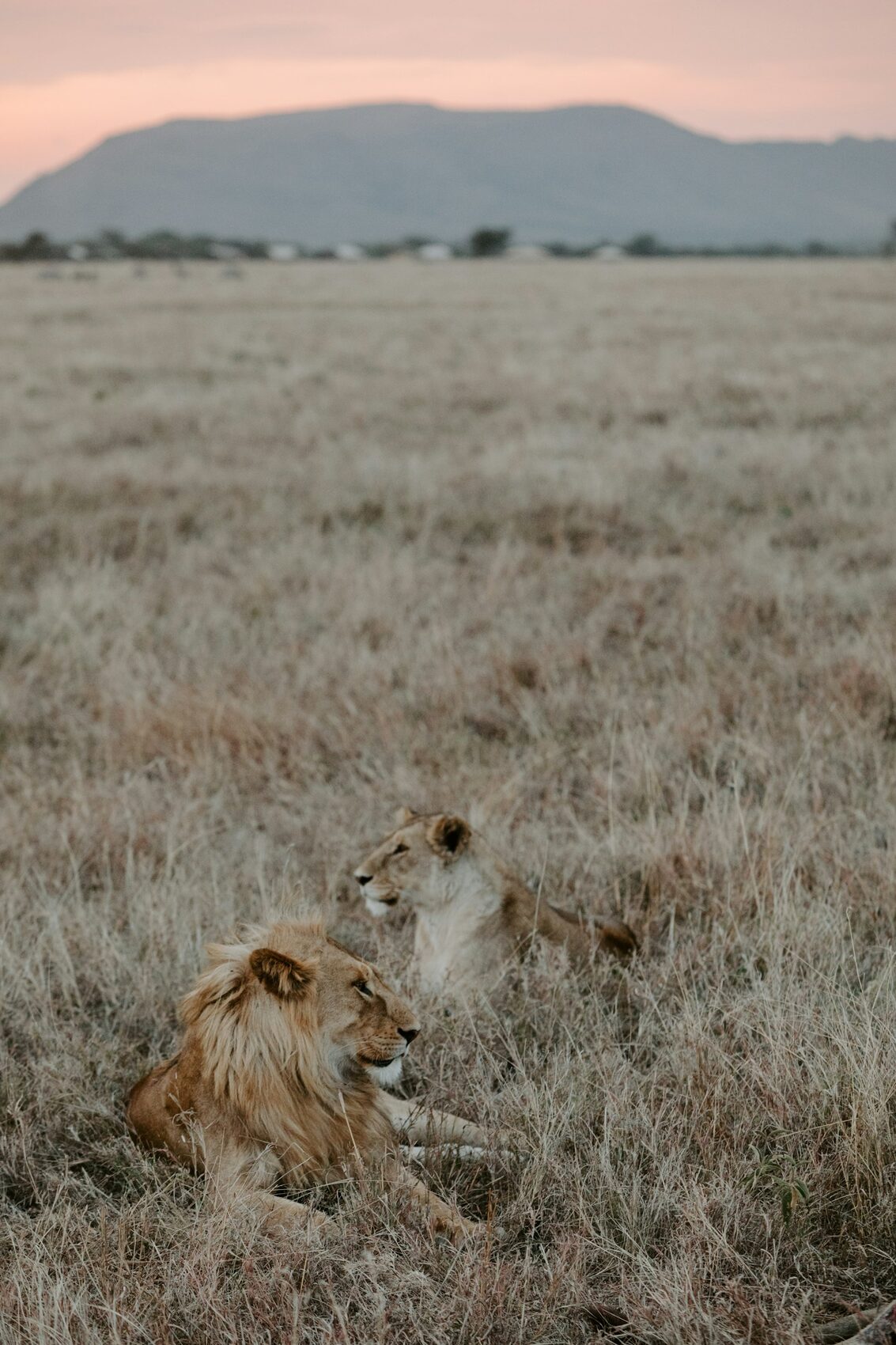 19
Lions are most active from late afternoon through the night and into the early morning, so a dawn drive and an evening drive are worth far more than anything in between.
A roar carries around five kilometres on a still night, and it is how prides advertise territory and locate each other. Hearing it from camp after dark is, for most guests, the moment the trip stops being a holiday and becomes something else.
20
A good lion sighting is mostly a matter of timing and patience. These are the things our guides work to, and the things worth knowing before your first drive.
Lions are the headline sighting on our game drives — and the reserves we use in the Eastern Cape are largely malaria-free, which makes this an easy first Africa for families.
A game drive with us stands entirely on its own: dawn starts, long golden afternoons, and the kind of sighting you stay with rather than tick off and drive on from. Guides work to the light and to fresh sign, so you are not simply driving loops hoping to get lucky.
It also sits easily alongside something else. Plenty of groups run game drives for part of the party while others are on a hunting safari, or add a week in Nosy Be afterwards. We build whichever combination suits the people coming.
Tell us your dates and who is coming, and we will build a safari around the wildlife you most want to see. Every trip is quoted individually rather than sold as a fixed package.
The kind of unhurried sighting worth staying with.
Early morning and late afternoon. Lions rest for around twenty hours a day and are most active from dusk through the night into first light, so dawn and evening game drives are worth far more than the middle of the day.
Kruger and the greater Lowveld, the Kalahari in the Northern Cape, and reserves such as Madikwe and Pilanesberg. Most of South Africa's lions live inside protected areas.
Related females — sisters, mothers and daughters who stay in their birth territory for life — together with their cubs and the coalition of males currently holding the territory. Prides often split into smaller parties for days at a time.
Mostly the females, and often cooperatively. They are ambush hunters rather than distance runners, working to get within about thirty metres before committing, and most attempts still fail.
It begins as a fringe at around two years old and darkens and thickens with age and condition, so a full dark mane usually indicates a male in his prime rather than simply an old lion.
Around five kilometres on a still night. Prides roar to advertise territory and to locate each other, and it is commonly heard from camp after dark.
The African lion is listed as Vulnerable on the IUCN Red List, with habitat loss and conflict with livestock farming the main pressures. South Africa's populations are concentrated in national parks and managed reserves.
Yes. Photographic safaris and game drives are available on their own or alongside any other itinerary — see our South Africa Experiences page.
Lions are the headline sighting on our game drives. Tell us when you can travel and we will build the safari around the wildlife you most want to see.
Rough dates and who is coming is enough to start. No lengthy booking form, no card details.
If the days you have will not cover it, we say so up front and adjust rather than take the booking and disappoint you.
Nothing sold off a shelf. Priced against your dates, group and interests — in USD, Euro or ZAR.
Land-based four to sixteen, live-aboard six to eight, big-game fishing four to five. Never a crowd.
Ask On WhatsApp Request A Quote
We respect your privacy under South Africa’s POPIA. This site does not use advertising cookies. With your permission we use Google Analytics to see which pages are useful; otherwise it uses only what it needs to work and stay secure, plus a few trusted services (Google Fonts, Cloudflare security, and on our Contact page the tools that check phone numbers and dates). Choose what you are happy with — you can change it any time under “Privacy settings” at the foot of every page. Read our Privacy Notice.
Keeps the site working and secure (Cloudflare) and remembers this privacy choice. These cannot be switched off.
Google Analytics shows us which pages are useful and how visitors find us. It sets cookies (_ga) and only runs if you allow this.
Would allow advertising or social-media tracking. We do not use any at present; if we ever do, they only run if you allow this.